VINTAGE ENGLISH
VED from VICTORIA INSTITUTIONS
It is foretold; the torrential flow of inexorable destiny!

VICTORIA INSTITUTIONS
Aaradhana, Deverkovil 673508
India
admn@victoria.org.in
admn@victoriainstitutions.com
Telegram: https://t.me/VICTORIA_INSTITUTIONS
Printed versions of all books are available here.
All books in webpage versions are available here.
Contents
Prologue
This was a proposed digital periodical on antique English first published in 2009. However, there were no subscriptions, and it stopped after the first issue.
The themes inside this were about an antiquity that is slowing vanishing from earth, as England slowly gets filled with non-English ‘multiculture’.
The reading items inside include items from classical English, antique history, grand adventures, maritime explorations, colonial experiences, scientific conquests, historical figures, solitary intellects, political experiments, social reforms, daring actions and much else, all from the antiquity of England.
NOTE 12th June 2024: This book is about an England that has ceased to exist in its original form. Moreover, I do not have any feeling that the nobility as well as the monarchy of England is pro-England or represents the English. They are both Continental European superimpositions upon England and the English.
Introduction
English themes have always been a passion for me. It was connected to a lingering feeling of admiration for the English, in terms of their history, political development, scientific discoveries, geographical adventures, spirit of adventure, and much else. Yet, beyond all else, I discerned a wonderful difference in the English communication system, which was markedly different from the many other languages with which I was acquainted.
When you work with passion, it ceases to be work. However, I am not an Englishman in any sense of the word. Then, what is my justification for creating this magazine that apparently is about something on which I have no claim on?
Well, I can justify my efforts thus: There have been many Englishmen who have studied and written appreciatively about so many things that were not connected to England and English heritage. For example, Egyptian themes, Roman history, Indian scriptures, Greek fables, Biblical stories, Islamic contentions, Buddhist teachings and much else. The same logic in my case also.
Then there is another fact also. Look at this: Even though classical physics was discovered by an Englishman, Sir. Isaac Newton, the subject is being taught all over the world. Many persons all over the world, who have studied this subject, consider it to be within their domain to make improvements on the subject, and write and discourse on it. The same logic in my case also.
I am very much acquainted with English themes, including colonial experiences, English classical literature and many other things. I cannot claim to be an expert in these subjects, but then everything can be studied and understandings improved.
Currently, I have to do the major part of the writing in this magazine, as it is in an infant stage. I need to bring in a definite shape and form to the theme, style, focus, and philosophy of this periodical. If there are persons who would contribute their experiences, knowledge and writings, I can confine my own writings to a particular percentage.
Now what is to be achieved by this magazine? Well, there are many things. For one thing, it aims to bring out the greatness of the English language and of the persons who speak it, to the exclusion of other languages.
That is, the native English speaker. It is not been said that Englishmen do not know any other language, but then most other languages are only of secondary importance to them. So that their innate thinking process is in English. It is not like a Frenchman, German, Chinese, Indian, Pakistani, South American knowing and speaking English. For, they are at home in their native tongue, and their thinking process is connected to their native language. When they speak in English, it is very much possible that the inhibitions, controls and mental complexes connected to their native tongues would creep into their mood.
Or at least, in the mood of those around them. Some of them may claim that they can also think in English when required, but then it is not so easy a thing as they claim it to be. For, each language creates specific and unique emotional reactions in mood and thoughts.
Then there is another thing. It is the need for correction of a fact of history. In many nations all around the world, the English are vilified as a vile nation that enslaved many others. It is not true. The English were the real harbingers of the divine light of liberty to many geographical areas in the world. This is a fact of which even the English are unaware.
If the English stood apart from the natives of the places where they had political power, it was only due to the fact there was some sinister negativity in the local social systems, of which they were frightened of, and wanted to keep away from.
Then, there is the aim of letting others know what is the real superiority of the English speaking race. It is not in their White colour, or in their genes, but in their communication software, which is wonderful, compared to so many other languages software. I mean to deal more on this theme in the next few pages. It is this communication software that has made them great risk takers and winners.
Remember the saying: England always wins the last battle! The secret is encoded in their language. Maybe there are other languages similar to that of English, but then I do not know many languages, and can’t say for sure which ones are similar to that of English, in certain crucial elements.
Now what is the list of items that will be dealt in this magazine, in varying permutations & combinations? Well, the list can be long.
The first will be about the inner codes of English languages.
Second, there shall be a discussion on an English author, mostly from the classical genre (at least for now), with interesting titbits on his life, style of writings, influences, family, romances, and passions. There are plenty of persons whose writings had been a passion for me. They do include Sir. Walter Scott, Charles Dickens, Oscar Wilde, Somerset Maugham, A J Cronin, R L Stevenson, Rudyard Kipling, Enid Blyton, Jane Austin, Baroness Orczy, Arthur Conan Doyle, Samuel Johnson, P G Woodhouse, Daniel Defoe, Louis Carroll, H G Wells, Mark Twain, Agatha Christie, Daphne du Maurier, Saki, Bronte sisters, Jack London, Earl Stanley Gardener, Barbara Cartland, Ayn Rand, Douglas Adams, James Hadley Chase and even such authors as Kahlil Gibran.
At times, even such non-English authors as Alexander Dumas, Voltaire and such others whose translated works have been popular in English will also be discussed.
Third, a story or short story from the classical era. With a minor discussion on background of the story. It is admitted that certain of the classical writings may seem a bit tedious and cumbersome to modern readers. So, care shall be taken to include only the more easier to digest writings from the immensity of works available in classical English.
Fourth, some famous poem or bit of a poetry. Won’t be a lengthy one. Maybe one poem from some classical novel or something like that. Or from the folksong genre.
Fifth, there shall definitely be themes from the British colonial history. The ways and manners as well as the compulsions. The spirit, the adventure, the fables, the legends as well as the people who populated the colonial times. The positive actions as well as the negative deeds.
Sixth, a discourse on English scientists / mathematicians / philosophers, including their idiosyncrasies, eccentricities and curious features. A slight writing on their discoveries also. Mind you, I do not aim to fill up this magazine with complicated technical features of science and mathematics.
Then come the fabled tales from English maritime history. This shall include the names, details and experiences of famous English sea captains. May be a bit on English buccaneers!
Eight, there shall be a section on English films, with more emphasis on old British movies, and also on Hollywood movies of the yesteryears, connected to English themes (England, English colonialism, maritime adventures, classical writings and such others).
Naturally, there shall be a section on English actors and directors.
Tenth, wars and battles naturally need a place in this magazine. Not only the World wars One and Two, but also the immense of them connected to English colonialism, European wars, Wild West, and a bit on the civil wars inside Britain in the historical past.
Eleventh, there shall be a section on British Monarchs, and their lives, triumphs, achievements and wasted efforts, if any!
There have been great persons, not the mahatmas and the revered holy cows, but still persons of resounding intellect and outstanding visions. They will be given a place.
There will be titbits on incidences of mention, both minor as well as major. Then places of significance for the English.
If possible, a write up on classical English food and drinks.
As to allusions and passions for any particular religion, and religious themes, there shall be none. It shall be as Lord Macaulay had proposed for the English colonial rule.
Last but not the least, the English Nursery Rhymes, and folksongs, and off course, the fairy tales / folklores.
On many of these themes, work can be commenced, with a definite level of profundity, with support from resources. Yet, there are many areas which would require help and contribution. Beyond all that, there are the niceties of English social attitudes, and reflexes, through the ages, including the Victorian. Then about the beauty of the English flowers and the grace of the English countryside. Well, these are areas where someone with exquisite knowledge can come in.
It is being admitted that this magazine is not a work of an extremely erudite person. The themes shall be in a simple style and manner, and may not be scholarly.
The Language
English is a wonderful language. Lord Macaulay, in his much-maligned Minutes on Indian Education has said:
We have to educate a people who cannot at present be educated by means of their mother-tongue. We must teach them some foreign language. The claims of our own language, it is hardly necessary to recapitulate. It stands pre-eminent even among the languages of the west.
He does go on to list out the reasons of the supremacy of English. These reasons are many and varied. All are acceptable and of irrevocable quality. Yet, he did miss the most significant and enduring goodness of pristine English.
This is the quality of English being a language with only a minimal of socially deprecating/dominating words and also words that lend holiness/supremacy to socially dominant persons.
For example, in Indian languages, all communication are arranged and moulded by words that literally split the individuals of any social/professional/familial group on the basis of age, profession, social status, financial capacity, physical prowess, and much else. It is a very diabolical world that this type of communication creates, and lends to a mood of continuing mutiny, subjugation, opportunism, treachery, over-smartness, grouping, outsmarting, regimentation and indiscipline; and many other negative elements creep into the social communication.
I do not want to write more about these things here because these are things that I have discussed in my old book: March of the evil empires: English versus the feudal languages.
There are other wonderful features about the English language. One is that it is very easy to learn. Macaulay did stress on this, when he argued that the natives of India (British-India) should be taught English.
English is very easy to learn compared to so many other languages. It is like the modern software, as against the earlier ones. The earlier ones and even the earlier computers were very complicated to use. One needed a lot of extra knowledge to operate a computer. However, as computers grew in intelligence, the ease of use also increased.
Look at Cantonese. I do not know much about it. However, I have been told that there is an immensity of alphabets in this language. Look at Hindi, Tamil, Telugu, Malayalam and much else. The number of alphabets and their transformed forms are immense in number.
Now look at English. Just 26 alphabets. Most of current day human knowledge can be encoded into written text using these simple 26 alphabets. However, I must say that not all human knowledge and emotions can be encoded into written text using English alphabets, especially those connected to many non-English languages.
In many ways, this incapacity only adds to the beauty and strength of English. For corroding social and human moods and communications cannot be encrypted into, or sensed by English.
There might be other languages of similar quality like English. If there are, they are also wonderful communication software, which can create and design superb social and human features.
In many ways, I would say that the growth of human intelligence is intimately connected to the growth of language. However, it may be seen that it is English that took the lead in creating new knowledge and its dissemination.
This statement may create recriminations. However, there shall be efforts to qualify and justify this statement, in the succeeding issues of this magazine. For the time being, it may be said that the growth of human languages may even be connected to the progressively increasing capacities of the human hand over the generations. Well, this theme is well beyond the parameters of this magazine.
Author
Somerset Maugham
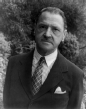
In this issue of Vintage English, the author dealt with is Somerset Maugham (pronounced 'mawm').
He is an author, very much dear to me. I have not read all his novels, but then his Of Human Bondage, I read when I was in pre-graduation years. I believe that I was too young then to fully appreciate the deepness of the theme. It was a long novel, and must have been tedious in my first reading. But then, through my early experience in reading classical English literary works, I had built up an understanding that these novel are better enjoyed in the second and subsequent readings.
I have gone through the novel, in parts and pieces, many times. It is long ago now. Yet, I remember the theme, and its undercurrent of binding passions, as powerful as destiny itself. Yet, the hero’s physical defect, being clubfoot didn’t and doesn’t seem to me a great deficiency.
I have read only a few of his novels, and those too in the far distant years. I remember them vaguely. There is a dim remembrance from The Razor’s Edge, which I think did not amuse me much.
Cakes and Ale also, I can remember. I think it was a powerful novel, set on complicated human relationships, including that of dependence and infidelity.
I quote from Wikipedia
Maugham drew his title from the remark of Sir Toby Belch to Malvolio in William Shakespeare's Twelfth Night: "Dost thou think, because thou art virtuous, there shall be no more cakes and ale?"
Cakes and ale are the emblems of the good life in the tagline to the fable attributed to Aesop, The Town Mouse and the Country Mouse: "Better beans and bacon in peace than cakes and ale in fear".
Maugham once said, "Most people cannot see anything, but I can see what is in front of my nose with extreme clearness; the greatest writers can see through a brick wall. My vision is not so penetrating."
I cannot very well agree with his diffidence. It is my experience that he is a person with a tremendous power of observation and understanding. He could very well penetrate through the thick walls of emotional concealments, and of differing social and cultural experiences.
Maybe he could discern through the codes in the software that existed behind the eventualities and us. {Persons who are interested in this theme about codes that control our life, please connect your internet and click here}
I have read his Moon and Six Pence many times. When I first took up the book many years ago, I remember the feeling that I couldn’t get a head or tale of the theme, at least in the first chapter. It seemed too connected to a particular era in English society, and that too, extremely integrated.
I had felt that, as a stark outsider, this novel was well beyond my levels of comprehension and enjoyment.
Nevertheless, as I went through the next pages, I could feel the power in the theme. His style of inserting lengthy discourses on strong understandings of complicated human situations would be a real discouragement in the first reading. I finished my first reading in my traditional ritualistic mood.
Then came the repeated readings. I could then get to see the quaint gorgeousness that lay embedded in the immense lines and paragraphs. It was like tasting a delicious exotic dish, with pied ingredients.
It has been said that this novel is based on the life of Paul Gauguin. I am not sure if this is true. However, what I discerned in the novel is the passion that lies dormant in all men and women to pursue the ideal as he or she sees it.
However, very few persons do dare to venture on this perilous journey. Most remain content with the mundane and the ordinary, and live lives in mediocrity, in contemptuous fear of the unknown living standards that necessarily come to accompany those who move out of the beaten track.
It is a brutal novel, written in terrifying bluntness. The frightening single purpose mood of the protagonist, as he moves ahead through his destiny, bearing and creating social upheavals is best read, than heard talked about. The viciousness in the character lies in close association with an admirable feature of fortitude.
Once you know the story, then you can settle down to enjoy the intricacies within. Maugham has superb mastery over words. He uses them with meticulous precision to delineate his marvellous observations on paper. See these words of his from Moon and Six Pence {It is about the protagonist (Strickland)}:
He was independent of the opinion of his fellows.
And it was just that which had most disconcerted me in my dealings with him. When people say they do not care what others think of them, for the most part they deceive themselves.
Generally, they mean only that they will do as they choose, in the confidence that no one will know their vagaries; and at the utmost only that they are willing to act contrary to the opinion of the majority because they are supported by the approval of their neighbours.
It is not difficult to be unconventional in the eyes of the world when your unconventionality is but the convention of your set. It affords you then an inordinate amount of self-esteem. You have the self-satisfaction of courage without the inconvenience of danger. But the desire for approbation is perhaps the most deeply seated instinct of civilised man.
No one runs so hurriedly to the cover of respectability as the unconventional woman who has exposed herself to the slings and arrows of outraged propriety. I do not believe the people who tell me they do not care a row of pins for the opinion of their fellows. It is the bravado of ignorance. They mean only that they do not fear reproaches for peccadilloes, which they are convinced none will discover.
Quoting from Wikipedia: According to some sources, the title, the meaning of which is not explicitly revealed in the book, was taken from a review of Of Human Bondage in which the novel's protagonist, Philip Carey, is described as "so busy yearning for the moon that he never saw the sixpence at his feet."
Presumably, Strickland's "moon" is the idealistic realm of Art and Beauty, while the "sixpence" represents human relationships and the ordinary pleasures of life.
Maugham has written much; Novels, plays, short stories, essays and travelogues. However, it is his short stories that have been of enduring enchantment for me.
I think I have read most of them, in my pre-graduation years. It has been a long time. I have only very vague memory of most of the themes. I don’t remember many of them at all. But then, all of them do have a singular theme stretching through them all.
Most of these are stories of English / British individuals living in far off geographical areas, cut off from their native land and social system. They exist as solitary islands, right the midst of strange and disturbing social communication systems and structures. They are doing a very good job, living up to their famed ideals of individual quality. Yet, the weird ambience does prey upon them, and their minds.
The stories present a rare mix of extremely complex emotions.
There are issues of passions, strange alignments, racially forbidden infatuations, infidelity, eerie powers of the eastern witchcraft, condescension, living up to the popular expectations of English honour and courage, discretion verses valour, solitude, isolation, magnanimity, animosities, insecurities, outrage, and the continuous need to be above the local social system, which has a very creepy contempt for those who go below.
Yet, in all these themes, I have discerned the acute discernment by the author about the complex nature of non-English Eastern culture, language and social systems. The force that the language and words of the east exerts on the persons who can understand it. How it bears on the English individuals also.
Many of them had been swept off to these far off shores by the idiosyncrasies of the English laws. There is passion and pathos, in these stories, that linger on.
Actually, in these times when the English nations are widely opening themselves up to the global communities, I feel that there is a wealth of information in these stories for those who are in charge of policymaking. Not heeding the lessons hidden in these stories can lead to the unmaking of English social systems.
Maybe there are hints of why there is a decay/collapse of English economic systems in sharp synchronisation to fantastic technological progress.
Maugham did not have to take recourse to his imagination to write most of these stories, for many of them presented themselves to him during his stay/journeys in the eastern islands. He only had to convert them into a readable form.
Many of the themes in the short stories, I can vaguely remember, but then I can’t connect them to any particular title.
However, there is one story that sort of has stood apart from the other themes. It is Princess September. Though the setting is based in the East, the theme is somewhat similar to English fairytales. Many a time, I have felt that it is similar to Oscar Wilde’s Happy Prince, even though the themes are entirely different.
Then there is his The Verger, which also deals with a very light delightful theme. It also stands starkly apart from his usual themes.
However, as per my experience, most of the themes of his short stories deal with emotional problems and fantastic happenings connected to social systems, which more or less contort English communication systems. I am not sure if Maugham was aware of this fact. However, his observations are meticulous in their precision.
The truth about the English natives living in far off locations was that they were more or less right inside societies where the social structure were acutely different. They would feel the measuring, ranking and stratification of themselves in the minds of the local inhabitants. As they get to understand the local languages, the trauma of this issue increases.
The only way to ward of its ill effects would be to become more and more recluses, and bear an aura of superior complex.
Maugham has also written a different genre of short stories, based on a character called Ashenden. Ashenden is a spy working for the British Secret Service. Actually, these stories were based on real life experiences of Somerset Maugham. Maugham had worked for the British Secret Service during the First World War, moving around under the guise of a writer. Many of these experiences had the tone of horror, pain and treachery.
There is no need to discuss his private inclinations here, especially sexual. There is his own famous lines:
‘There is hardly anyone whose sexual life, if it were broadcast, would not fill the world at large with surprise and horror’.
Nobody discusses any Mahatma’s similar indulgences when discussing his or her philosophies.
Maugham summed up his literary experiences in The Summing Up, which he published in 1938, when he was 64. It contains his views and feelings about style, literature, art, drama and philosophy.
However he did not die fast, and actually lived on until his death in 1965. He was 91 then. His old age was not a happy one. It is said that he was tormented by memories. Whether it was the effect of senility or his helpless to bear the evaluation of mediocre individuals, I am not able to say.
He has said thus in 1959:
What makes old age hard to bear is not a failing of one's faculties, mental and physical, but the burden of one's memory.
Somerset Maugham was born on the 25th of January 1874. He died on the 16th of December 1965.
A few years before his death, in 1962, he published fragments of autobiographical writings under the title Looking Back on Eighty Years. It came out in a serialised form in the London Sunday Express.
It has calamitous effects, with regard to his relationship with his daughter, Liza. For, the writings were depreciative of his former wife (her mother), Syre.
However, this writing does not confine itself to Syre, but does sketch his relationship with many other persons, including his own mother and also with such personalities as Sir. Winston Churchill.
The story
In this issue inaugural issue of Vintage English, a story by Somerset Maugham is being given. It must be said that it is not necessary that the story in an issue would be from the same author who had been discussed in that issue.
This story was a fantastic one for me, in more than one way. For one thing, this story pointed to the fact that Maugham could very well understand the inner core of cultural misfit between feudal language systems and English.
There are other things also that got my attention. However, they go beyond the parameters of the current subject matter.
As to the general theme, it is about an English young man who was deputed to a Samoa island to manage a British bank. He sees a half-caste girl (a girl born to a European father and a local woman). This girl is at home in the local language, and is part of the local social stream, even though she is good in English.
Somehow, he is enraptured by her form and demeanour, and marries her, without taking heed of all advice not to do it. He could have had her as a keep, but being very honourable in aims and perfectly in love, he goes ahead and marries her.
I can discern the power of the strings in the local language, that more or less encased the girl in a powerful web. It is a web, which puts her in the direct command path of her native family members.
Each word, spoken or written, carries unbelievable forces. The most horrible factor is that these strings remain non-tangible from English and to an English observer.
There is horror for the English young man, as he sees himself powerless as his wife literally becomes another person when she is in enwrapped in this web. The change is uncanny, yet real. The man tries to get his children learn English and become English, but the other side is unbelievably powerful. He learnt too late of forces that remain unfathomable for him.
Even the native attire that his wife wears to snub him has a tremendous effect in enwrapping her in native social hierarchies.
Beyond all this, this story also does give a hint to the powerful position that wives do stand in a married life.
When silly persons with frivolous intellect occupy such positions and start swaying to the pull of the feudal / hierarchical words and commands, the endeavouring husband’s aims and programmes literally gets disarrayed. If the husband is of frivolous disposition, then it creates no problems, beyond what he himself is floundering in.
This story is actually a treasure trove for the English policymakers. However, I fear that they may not discern the invaluable inputs, until it is too late. Also, there is much for persons who exists with their two legs in different worlds, to learn from this story. But will they discern it?
Beyond all this, it may be said the theme is not really that of a competition or dispute between White and non-White, or between educated and non-educated, but between the codes in English social structure and that of other social structures which are starkly opposite.
It also shows the inability of those who discern the difference between to convey this understanding to people in either side. It is not a story from Samoa, but from anywhere in the world.
Poem
On the banks of Allen Water
On the banks of Allen Water
When the sweet springtime had fled
Was the miller’s lovely daughter
Fairest of them all.
For his bride, a soldier sought her
And a winning tongue had he
On the banks of Allen Water
So misled was she.
On the banks of Allen Water
When the autumn spread its store
There I saw the miller’s daughter
But she smiled no more
For the summer, grief had brought her
And the soldier, false was he
On the banks of Allen Water
Left alone was she.
On the banks of Allen Water
When the winter snow fell fast
Still was seen the miller’s daughter
Chilling blew the blast.
But the miller’s lovely daughter
Both from cold and care was free
On the banks of Allen Water
In a grave lay she.
On the banks of the Clyde
On the banks of the Clyde stood a lad and a lassie
The lad's name was Gordie the lassie's was Jane
She threw her arms around him and cried do not leave me
For Geordie was going for to fight for his queen
She gave him a lock of her bright auburn tresses
He kissed her and pressed her once more to his heart
Till eyes spoke the love that her lips could not utter
The last word is spoken they kissed and depart
Over the burning plains of Egypt
Under the scorching sun
When he thought of the stories he'd have to tell
His love when the fight was won
He treasured with care that dear lock of hair
For his own darling Jenny he prayed
But his prayers were in vain she will ne'er see him again
Her lad in the Scotch brigade
Now the ocean divided the lad from his lassie
And Gordie was forced far away o'er the foam
His roof was the sky and his bed was the desert
But his heart with his Jenny was always at home
Now the morning that dawned on that famed day of battle
Found Gordie enacting a true hero's part
Till the enemy's bullet came into his billet
And it burned, oh, that dear lock of hair on his heart
Over the burning plains of Egypt
Under the scorching sun
When he thought on the stories he'd have to tell
His love when the fight was won
He treasured with care that dear lock of hair
For his own darling Jenny he prayed
But his prayers were in vain she will ne'er see him again
Her lad in the Scotch Brigade
On the banks of the Clyde dwelt a heart-broken mother
They told her of how the great victory was won
But the glory of England to her brought no comfort
For glory to her meant the loss of her son
But Jenny is with her to comfort and shield her
Together they'll weep and together they'll pray
And Jenny her daughter will be while she lives
For the sake of the lad who died far away
Excerpt from literature
This is an excerpt from George Bernard Shaw’s The Apple Cart. This drama was a strange one, considering Shaw’s infatuation with socialism and possibly communism. This is a drama that gives a hint of his doubts about unbridled democracy, and its dangers.
In this drama, there is a hint that he sees some beneficial aspects of British monarchy. In these days also, when democracy-run-amok has taken English nations to the brink of disasters, there may be a bit of sanity in these lines.
In these words quoted below, the King, the monarch of Britain, (the protagonist of the drama), argues the merits of retaining the English monarchy, when the politicians are in a haste to remove it from its antique position.
However, the monarchy of Great Britain was always a useless one for the native-English folks. That is the tragedy.
MAGNUS [continuing]
Naturally I want to avert a conflict in which success would damage me and failure disable me. But you tell me that I can do so only by signing pledges which would make me a mere Lord Chamberlain, without even the despotism which he exercises over the theatre. I should sink below the level of the meanest of my subjects, my sole privilege being that of being shot at when some victim of misgovernment resorts to assassination to avenge himself. How am I to defend myself?
You are many: I oppose you single-handed. There was a time when the king could depend on the support of the aristocracy and the cultivated bourgeoisie. Today there is not a single aristocrat left in politics, not a single member of the professions, not a single leading personage in big business or finance.
They are richer than ever, more powerful than ever, more able and better educated than ever. But not one of them will touch this drudgery of government, this public work that never ends because we cannot finish one job without creating ten fresh ones.
We get no thanks for it because ninety-nine hundredths of it is unknown to the people, and the remaining hundredth is resented by them as an invasion of their liberty or an increase in their taxation.
It wears out the strongest man, and even the strongest woman, in five or six years. It slows down to nothing when we are fresh from our holidays and best able to bear it, and rises in an overwhelming wave through some unforeseen catastrophe when we are on the verge of nervous breakdown from overwork and fit for rest and sleep only. And this drudgery, remember, is a sweated trade, the only one now left in this country.
My civil list leaves me a poor man among multi-millionaires. Your salaries can be earned ten times over in the city by anyone with outstanding organizing or administrative ability.
History tells us that the first Lord Chancellor who abandoned the woolsack for the city boardroom struck the nation with amazement: today the nation would be equally amazed if a man of his ability thought it worth his while to prefer the woolsack even to the stool of an office boy as a jumping-off place for his ambition.
Our work is no longer even respected. It is looked down on by our men of genius as dirty work. What great actor would exchange his stage? what great barrister his court? what great preacher his pulpit? for the squalor of the political arena in which we have to struggle with foolish factions in parliament and with ignorant voters in the constituencies?
The scientists will have nothing to do with us; for the atmosphere of politics is not the atmosphere of science. Even political science, the science by which civilization must live or die, is busy explaining the past whilst we have to grapple with the present: it leaves the ground before our feet in black darkness whilst it lights up every corner of the landscape behind us.
All the talent and genius of the country is bought up by the flood of unearned money. On that poisoned wealth talent and genius live far more luxuriously in the service of the rich than we in the service of our country.
Politics, once the centre of attraction for ability, public spirit, and ambition, has now become the refuge of a few fanciers of public speaking and party intrigue who find all the other avenues to distinction closed to them either by their lack of practical ability, their comparative poverty and lack of education, or, let me hasten to add, their hatred of oppression and injustice, and their contempt for the chicaneries and false pretences of commercialized professionalism.
History tells us of a gentleman-statesman who declared that such people were not fit to govern. Within a year it was discovered that they could govern at least as well as anyone else who could be persuaded to take on the job.
Then began that abandonment of politics by the old governing class which has ended in all Cabinets, conservative no less than progressive, being what were called in the days of that rash statesman Labour Cabinets.
Do not misunderstand me: I do not want the old governing class back. It governed so selfishly that the people would have perished if democracy had not swept it out of politics. But evil as it was in many ways, at least it stood above the tyranny of popular ignorance and popular poverty.
Today only the king stands above that tyranny. You are dangerously subject to it. In spite of my urgings and remonstrance you have not yet dared to take command of our schools and put a stop to the inculcation upon your unfortunate children of superstitions and prejudices that stand like stone walls across every forward path.
Are you well advised in trying to reduce me to your own slavery to them? If I do not stand above them there is no longer any reason for my existence at all.
I stand for the future and the past, for the posterity that has no vote and the tradition that never had any. I stand for the great abstractions: for conscience and virtue; for the eternal against the expedient; for the evolutionary appetite against the day’s gluttony; for intellectual integrity, for humanity, for the rescue of industry from commercialism and of science from professionalism, for everything that you desire as sincerely as I, but which in you is held in leash by the Press, which can organize against you the ignorance and superstition, the timidity and credulity, the gullibility and prudery, the hating and hunting instinct of the voting mob, and cast you down from power if you utter a word to alarm or displease the adventurers who have the Press in their pockets.
Between you and that tyranny stands the throne. I have no elections to fear; and if any newspaper magnate dares offend me, that magnate’s fashionable wife and marriageable daughters will soon make him understand that the King’s displeasure is still a sentence of social death within range of St James’s Palace.
Think of the things you dare not do! the persons you dare not offend! Well, a king with a little courage may tackle them for you. Responsibilities which would break your backs may still be borne on a king’s shoulders.
But he must be a king, not a puppet. You would be responsible for a puppet: remember that. But whilst you continue to support me as a separate and independent estate of the realm, I am your scapegoat: you get the credit of all our popular legislation whilst you put the odium of all our resistance to ignorant popular clamour on me.
I ask you, before you play your last card and destroy me, to consider where you will be without me. Think once: think twice: for your danger is, not that I may defeat you, but that your success is certain if you insist.
From English Colonial History
A magnificent experience
The English colonial empire was a magnificent experience for the world. It brought in English to a huge number of nations and geographical areas. Most of them were bound up in feudal language social systems. So that everywhere there was a strange level of hierarchical arrangement in society.
England also had a solid feudal social system, but it was marvellously different from most of other similar systems, for the communication software was English.
A French revolution in India
This statement may feel a bit trite. However, there is a minor hint to the correctness of this in the fact that one of the spurring points for the French Revolution was the understanding that in England people had a higher individuality than allowable or available under the French feudalism.
For example, if England had been geographically near to India at that time in history, a similar revolution would have taken place in India.
Liberating the slaves
It is not intended to go into all the aspects of the English Colonial Empire here. In this issue, the focus will be on one major world experience from the English colonialism. It is about the abolishing of slavery in the English Empire.
When talking about slavery, one tends to think only about the slavery of Blacks in the United States of America and other areas connected to it. However, this is a very miniscule view of the term ‘slavery’.
In most nations of the ancient world and in some nations of the modern world slavery was and is rampant. However, these nations are not English, and thus the local citizens fail to view it as slavery. Even if they understand the presence of ‘slavery’ in their midst, they sort of find justifications for the same.
The language as the chain
Most of the ancient sultans, kings and emperors of the ancient oriental world had slaves. The mighty architectural structures of India, including Taj Mahal and the grand forts and castles, would have been built using slave labour.
Currently a lot of people in India live lives similar to slaves in demeanour. It is not just the caste system that does it, but also the language system, which subdues a common man and promotes a government official or a rich man.
There was terrible slavery in Africa, South American ancient empires, far-east nations, and even in India. I am talking about the statutory slaves. This is apart from the people who were not statutory slave, but enslaved by the social system.
The slave-trade port
The port in Zanzibar was a main place for the loading of African slaves. It was a trade in which many native African groups also had interest, and active participation.
One may chance to think of the social communication system in African societies, wherein their own people helped in the enslavement of their brethrens. It is similar to the forced sex (brothel) industry in Bombay.
Spurring the spirits
Many things helped stir up the mood of the local people of England against slavery. One was the reports given by David Livingstone about Arab harassment on African slaves. It sort of rejuvenated the sagging spirits of the abolitionist movement.
English dissolving the mental chains
Any man who learns to think in English literally refuses to mentally become a slave. Even if he does accept his statutory station of being a salve, mentally he is much more elevated than a lower level man of say India, who is not legally a slave. The lower level man in India need no chains or whipping to do the biddings of his master, for the words in the feudal language fantastically place him in an unmovable position in society.
The language makes him understand his slavish standards and he learns to live with it.
As for a slave who learns English, his station of being a slave is totally contrary to the positioning in English. For in English, there is no subjugating words or expressions. The slave will definitely revolt.
His master also will be at a loss to justify his subjugation in English, other than by pointing to the statutory situation in the society. He will have to chain unwilling slaves, and possibly whip him to make him subdued. It is like the military training in oriental nations.
The ordinary soldier’s innate right to individuality has to be crushed to make him obedient to the whims and fancies of the officer class.
A very noble thing, indeed!
Everyone knows the history how Abraham Lincoln fought to free slaves from the United States of America. In every sense of the word, it was a wonderful thing.
For the Englishman was fighting to save the Black man from the sting of slavery. It was a noble thing to do. I do not think that such a thing had happened in any other nation of the world.
Not in India, not Africa, not in the Far East, Greece, European nations, South America, or in the Arabian nations.
Who wants to liberate a subordinate being?
Moreover, who wants to liberate persons who are socially beneath themselves? I do not think anyone in any feudal language nations would want a subjugated person to improve.
It would only cause distress to everyone else, for he or she will come to claim equality in a language, which does not have the concept of equality encrypted in it.
The cumulative affect would be that of lower level persons gaining the upper hand in feudal language communication system, which can drive every one of the others literally mad.
These concepts of equality and human rights and such other things are existent only in English and similar language systems.
The wonderful endeavour!
Now talking about emancipation from slavery, there is one endeavour that was of far more effect worldwide, than the American one. It was the Queen Victoria’s declaration of the Abolition of the Slave Trade in 1807 in the English Empire. .
Let me quote from the book British Empire and Commonwealth, written by George W.Southgate, B.A.
In 1776, a motion for the abolition of the slave trade was brought forward in the House of Commons. It was not carried, and in 1787 a Society for the Abolition of the Slave Trade was formed by William Wilberforce, Thomas Clarkson and Zachary Macaulay.
Much opposition was offered to the propaganda work of the society by those whose interests would be affected. -----------------------------
The planters of the West Indies subscribed large sums of money in order that opposition to the work of the society might be maintained.
But humanitarian views at length prevailed, and in 1807, Great Britain passed an Act for the Abolition of the Slave Trade.
An immensity of British money had to be spent on compensating many slave owners. However, it may be seen in history that when Britain decides on a course of action, what follows is not passive endeavour. The British Royal Navy was commanded to crush the slave trade everywhere in the world.
The worldwide effect
Now it may be noted that this act had the effect of freeing slaves in far off nations, including such nations as India. However, this act could only free the legally enslaved persons.
The immense number of people who were in shackles due to the slavery imposed by the social system in collaboration with the feudal language system could get no relief from this.
Slavery was a fact all over the world. When slavery was banned by Britain, it was not easy to make the other nations follow suit. It would be correct to say that when the main international trade was in slave trade, certain Britain businessmen also had a hand in it.
But then, England was the only country in the whole world which had the conscience to see the inhumanity in the issue and used legislation and arms to stop it; even British businessmen were not spared!
Taking up arms
It required that the British navy had to board ships suspected of carrying slaves. Here it must be mentioned that America, the current apostle of human rights stood in sharp opposition to the British endeavours. For, the southern states of America wanted slaves.
The French had the traditional mental complex of others seeing them being servile to England, if they conceded anything to them. So, they did no other help in British endeavours, other than lip service The Spanish, Portuguese, and Brazilians were openly taking part in slave trade.
In the efforts to suppress slavery, the Royal Navy did contribute much.
The Royal Navy’s history goes back to about a thousand years, when King Alfred fought his first sea battle in 882 AD. The history of England has a very unique link with the Royal Navy and to the sea waves. This special connection is visible in a lot many attributes of the English.
A squadron in the far seas
A West African Squadron was set up (known as the preventative squadron) to patrol the African coasts. It was a slow start. Ships were not enough. There was the European war and the war with America going on. Still, the English did their best and continued with their predestined divine duty.
Fighting for the enemy!
It may be mentioned in passing that the Africans in America, both enslaved as well as free, had fought alongside the American revolutionaries, in fighting against England. Really, there is a paradox in this scenario!
The trials & tribulations!
The work entrusted with the royal navy service men was tough. Most of the time, it was an unhappy and wearisome experience. The ships given to them were also not really fit for the job. Many were old and slow.
Moreover, there were not enough. However, the traditional spirit of the English, to be stirred up by noble ideals, fuelled the program despite the terrible odds in far off waters of alien coasts.
The death rate among the seamen was quite high. They died not only in encounters with the slave traders, but also infected with the strange diseases of the African coasts, including malaria and yellow fever. It is doubtless that the men and officers of the Royal Navy took up the cause as a sort of divine volition.
The triumphs!
The news of the capture of slave ships and the liberation of the slaves were reported gloriously in England. Now, it must be understood that all these endeavours were essentially to cause English interference in African locations.
For, almost all these nations had a ruling class, which was not too much bothered with the comfort and security of the subservient class. Moreover, their enemies and subjugated enemies were all necessarily to be enslaved.
England naturally had to take up action against African leaders who supported slave trade. As per modern International Relations experts, this might be equal to usurping the sovereignty of other nations.
Some local kings were even deposed from their station in pursuance of this policy. Many local rulers (around 50) were forced to sign anti-slavery treaties with Britain. Looking back, these incidences may be taken as imperialist actions by shallow historians, who live life in comfortable circumstances.
The rearguard
Even though, the Royal Navy was doing its duty with divine diligence, back home, it had to face tough times with Britain’s own Home Office, for there were issues of laws and rules to be seen to. Moreover, other European nations were not happy with these actions, which not only put them in the wrong, but also made them seem of a lesser quality.
One of the long terms results of the anti-slavery actions of the Royal Navy was the signing of treaties with the Sultans of Muscat and Zanzibar. This led to the permanent stationing of a Guard Ship off the Zanzibar coast.
The heroes
Many captains, maritime officers, and men became famous through their heroic liberation of people from the clutches of slave trades. Their name could include those of Philip Colomb - the daring officer of the wooden steam sloop 'Dryad, Captain George Sulivan and such. Philip Colomb commanded HMS Dryad in the years 1868 to 1870.
He was then in the Persian Gulf region. His job was the suppression of the slave trade, particularly around Zanzibar and Oman. He has written a fascinating account of his experiences in this endeavour in the book: Slave-catching in the Indian Ocean: A record of naval experiences.
The endeavours and the dangers
As the Royal Navy tightened its net on the major slave trafficking routes, the slave traders had to wait for a long time for a slave ship to slip through and reach them. Therefore, they kept their captives in shackles in thatched roof shelters (barracoons), in terrible civic conditions.
This prompted the English to go into the inland areas, and move up the rivers. They destroyed the barracoons, and freed the slaves. It was no doubt extremely dangerous deeds, that only the extremely brave or the foolhardy would attempt.
The dangers were not only the attack of the slave traders, but also the diseases of Africa and its eerie terrain.
Moreover, it was mostly thankless work, for it is doubtful if the descendents of these liberated slaves would acknowledge their obligation to England. It is very much probable that they would be unhappy that their forefathers were not taken to America, for then they would have currently been the citizens of the US.
The terrible experiences
Everything that England did has been misinterpreted by vested interests. Here also, this had happened even in those days. Even though, slave trade was suppressed, it could not be stopped.
For, there were still nations which had not allowed Britain to accost their ships to search for evidences of slave trade. Those ships, which carried the flags of these nations, could not be touched by the Royal Navy. However, the tight blockade that the Royal Navy created in the area made it very hard for any slave trade ship to pass through.
This led to another issue. Slaves were brought to the coastal areas and kept in shackles, awaiting the arrival of a slave trade ship. Sometimes, they never came and the traders simply left the slaves there, with no provisions for living. These persons literally died of starvation and other misery.
Those who were criticising the suppression of slave trade used these incidences to say that England should immediately stop its activities as it was causing hardship for the slaves. However, the Royal Navy personnel stood by their commitment and argued for the continued effort in the same direction; for they had seen the reality with their own eyes.
Then there was another issue. The slaves were shackled, and hidden in layers of flat beds inside slave ships. When the Royal Navy ships tried to chase these ships, the ships tried to unburden themselves of the excess weight by throwing out the shackled slaves into the sea.
This lightened their weight and they could move fast and escape. At times, sharks accompanied these ships, in the certainty of getting live human meat.
Sometimes, the slave ships did this to avoid the fine imposed by the Royal Navy, if any slaves were found onboard. If any slave was found on a British ship, then also heavy penalty was imposed on it by the Royal Navy.
These slave ships had a terrible rotten smell, which could be felt even kilometres away. Even though, the stench acted as a pointer to the presence of these ships, accosting them was a terrible experience in terms of olfactory factors.
By this time the West African Squadron was disbanded, it had captured more than 500 ships and freed thousands of prospective slaves. The illegalisation of slavery in the United States more or less led to the total decline of slave trade over the seas.
Horrendous experiences!
While on this subject, another minor news may also be related here. There was a young Royal Navy officer by name Cheesman Binstead in one of the ships patrolling the West African Coast.
One day, he noticed a lot of sharks gathered in the sea. On enquiring about this, he was informed that some slave ship had thrown their ‘merchandise’ into the sea to escape fine or capture.
Cheesman Binstead’s wrote a diary about what all experiences he had when he was on this duty in the West African coast. He writes in his diary about the condition of his own ship filled with liberated slaves:
‘The ship is now truly miserable, many of our own crew very sick and the decks crowded with black slaves who are dying in all directions and apprehensive - their cases of fever are contagious.’
Problems of differentiating
There were other tragedies also associated with the saving of potential slaves. The Black natives could not differentiate between their saviour and their tormentors. Sometimes, they mistook their English liberators for slave traders; there being a lot of Europeans also in the vicinity, along with the local enslavers.
A tragic incident
One time, he gave chase to a convoy of canoes on the Congo River, seeking enslaved persons. When he came near to one of the canoes, the people inside simply jumped into the water and met a watery grave.
They did this because they thought that he and his companions were slave traders. This incident was tragic, but it also points to the sheer terror the local people felt towards the slave traders.
The discomfiture
Another thing was the discomfiture that the naval ratings had to bear. The ships would be filled with the Africans in various states of disease and mental torment. The shipmates would have to put up with them. Contagious disease would infect them also. Many died.
The magnitude
It was a huge task, patrolling around 3000 kilometres of West African coast. It may be mentioned in passing that local people also were recruited in aid of the work. For example, a lot of fishermen from the coasts of Liberia were recruited as support crew or sailors.
The actions
There were many actions at sea, many of which became famous. Certain ships also achieved glory in popular mind. One such famous schooner was Pickle, which achieved fame for capturing the armed slave ship Voladora off the coast of Cuba on 5 June 1829. Other famous ships included HMS Buzzard, which fought with the ‘Formidable’, Electra which caught a Carolina slaver and Acorn which brought down Gabriel.
Now, this is only part of the story. With the passing of the Act for the Abolition of the Slave Trade by Britain, all British possessions became areas where the slaves could escape to and become free. In this connection, it may be remembered that Canada on the north of the United States became a haven for the slaves, who could manage to escape and reach there.
A true life story
Below is an excerpt from Scenes in the Life of Harriet Tubman written by Bradford, Sarah H. (Sarah Hopkins). It is a true life story detailing a scene of slaves escaping from the US to Canada.
The fugitives were on the bottom of the wagons, the bricklayers on the seats, still singing and shouting; and so they passed by the guards, who were entirely unsuspicious of the nature of the load the wagons contained, or of the amount of property thus escaping their hands. And so they made their way to New York. When they entered the anti-slavery office there, Joe was recognized at once by the description in the advertisement.
"Well," said Mr. Oliver Johnson, "I am glad to see the man whose head is worth fifteen hundred dollars."
At this, Joe's heart sank. If the advertisement had got to New York, that place which it had taken them so many days and nights to reach, he thought he was in danger still. "And how far is it now to Canada?" he asked.
When told how many miles, for they were to come through New York State, and cross the Suspension Bridge, he was ready to give up.
"From dat time Joe was silent," said Harriet; "he sang no more, he talked no more; he sat wid his head on his hand, and nobody could 'muse him or make him take any interest in anyting."
They passed along in safety, and at length found themselves in the cars, approaching Suspension Bridge. The rest were very joyous and happy, but Joe sat silent and sad. Their fellow-passengers all seemed interested in and for them, and listened with tears, as Harriet and all their party lifted up their voices and sang:
I'm on my way to Canada,
That cold and dreary land;
The sad effects of slavery,
I can't no longer stand.
I've served my master all my days,
Widout a dime's reward;
And now I'm forced to run away,
To flee the lash abroad.
Farewell, ole master, don't think hard of me,
I'll travel on to Canada, where all the slaves are free.
The hounds are baying on my track,
Ole master comes behind.
Resolved that he will bring me back,
Before I cross de line;
I'm now embarked for yonder shore,
There a man's a man by law;
The iron horse will bear me o'er,
To shake de lion's paw.
Oh, righteous Father, wilt thou not pity me,
And aid me on to Canada where all the slaves are free.
Oh, I heard Queen Victoria say,
That if we would forsake
Our native land of slavery,
And come across the lake;
That she was standin' on de shore,
Wid arms extended wide,
To give us all a peaceful home
Beyond de rolling tide.
Farewell, ole master, etc.
The cars began to cross the bridge. Harriet was very anxious to have her companions see the Falls. William, Peter, and Eliza came eagerly to look at the wonderful sight; but Joe sat still, with his head upon his hand.
"Joe, come look at de Falls! Joe, you fool you, come see de Falls! its your last chance."
But Joe sat still and never raised his head. At length Harriet knew by the rise in the center of the bridge, and the descent on the other side, that they had crossed "the line." She sprang across to Joe's seat, shook him with all her might, and shouted, "Joe, you've shook de lion's paw!" Joe did not know what she meant. "Joe, you're free!" shouted Harriet.
Then Joe's head went up, he raised his hands on high, and his face, streaming with tears, to heaven, and broke out in loud and thrilling tones:
"Glory to God and Jesus too,
One more soul is safe!
Oh, go and carry de news,
One more soul got safe."
"Joe, come and look at de Falls!" called Harriet.
"Glory to God and Jesus too,
One more soul got safe."
was all the answer. The cars stopped on the other side. Joe's feet were the first to touch British soil, after those of the conductor.
There is more to British emancipation of slaves.
The patrolling Royal Navy
The book Martha Ann’s Quilt for Queen Victoria written by Kyra E. Hicks is the true story of Martha Ann, who is 12 years old, when her Papa finally purchases her freedom from slavery and moves the family from Tennessee to Liberia.
On Market Days, Martha Ann watches the British navy patrolling the Liberian coast to stop slave catchers from kidnapping family and friends and forcing them back into slavery.
Martha Ann decides to thank Queen Victoria in person for sending the navy. But first, she has to save money for the voyage, find a suitable gift for the queen, and withstand the ridicule of those who learn of her impossible dream to meet the Queen of England. Her knowledge of Queen Victoria comes from reading a Liberian Newspaper. Source
Back to disintegration
What Britain did for the Black slaves of America is commendable. However, what have the Blacks states in the Africa done to themselves? They still require an encasing English environment, otherwise the same old self-destructive tendencies will continue. Remember, the people there participated in selling their brethren to the outsiders in the early centuries. No outsider can creep inside and steal them, unless there is disintegration inside their own social systems.
Apart from that, a word about Obama. He is not a descendant of the slaves of America. His father is from Africa and his mother is from America, possibly with English ancestors. In his rhetoric, he mentioned the fight his fellow American’s and his forefathers had with their enemy, and liberated their nation and made it free and independent. The enemy is obviously England!
Well, it is good rhetoric, but not correct. See the above writings on English endeavours for the emancipation of Black Slaves in America.
Scientist
Sir Isaac Newton
Isaac Newton could be the greatest of all scientists. He has said that ‘If I have seen further, it is by standing on the shoulders of giants’. However, it is possible that he more or less created classical physics on his own.
Even Einstein’s postulates and theories could very well be defined as tiny improvements on existing knowledge.
Newton was a very versatile genius. He is considered to be a physicist, mathematician, astronomer, natural philosopher, alchemist, and theologian. Beyond that, he was a man with a lot of personal capacities. He was born on the 4th of January 1643. His birth was a few months after his father’s death.
Actually way beyond a scientist, he was an Occultist.
His mother remarried when he was three, and he was brought up by his maternal grandmother. His mother tried to make him take to farming, but that was not his taste, nor his destiny. He never married, even though he did have a minor love affair, which was short-lived.
As a young boy, he is said to have made windmills, water-clocks, kites and dials. It is said that he did invent a four-wheeled carriage, which was to be moved by the rider.
Originality
What was great in him was his originality in the themes he dealt with. His Philosophiæ Naturalis Principia Mathematica, (later known as Principia) published in 1687, is considered to be the most influential book in the history of science.
It must be admitted that he was very much interested in occult studies and such themes. It may seem difficult to conceive how this man who was sort of champion of modern science could dabble in such ideas.
However, in this context it may be remembered that his postulate in Principia of an invisible force, able to act over vast distances, was heavily criticised by many persons. It was alleged that he was introducing occult agencies into the realm of science.
Though, he was admitted to the Trinity College, Cambridge in 1661, formal academic studies were not of any use to him. At that time, the focus of formal education was on Aristotle. Newton was privately engaged in reading on modern philosophers like Descartes, and astronomers like Copernicus, Galileo and Kepler.
By the year 1665, he had already developed the generalized binomial theorem, which was to later develop into the infinitesimal calculus. It was his private study in his home at Woolsthrope over the next two years that was to see the development of his theories on calculus, optics and the law of gravitation.
We can look at his discoveries on a step-by-step basis. He was possibly working on different fields of knowledge simultaneously, at least inside his mind.
First his Philosophiæ Naturalis Principia Mathematica. It is a three-volume work published on the 5th of July 1687. It contains Newton’s laws of motion, law of universal gravitation, and a derivation of Kepler’s laws of planetary motion. Newton’s laws of motion forms the foundation of classical mechanics.
Though Newton used his own creation of Calculus to formulate his theories, he did not make use of them in explaining his theories in the Principia. Instead, he used geometrical contentions.
The Principia had a supplement with the title General Scholium in which, his famous dialogue ("I feign no hypotheses" or "I make no guesses) was found.
Mathematics
It is claimed that Newton created the mathematical subject of Calculus on his own. However, this contention has some problem. Gottfried Leibniz was also working on similar lines and had actually discovered something more or less similar.
As per Newton’s companions, Newton had worked out his theory much before Leibniz did, but he did not publish the same until 1693.
Moreover, he could give a detailed sketch of this only in 1704. However, Leibniz did publish a full account of the same in the year 1684. This led to a great controversy, which was to disturb both their lives. Newton later said that he feared to publish his findings as he expected to be ridiculed.
It must be said here that Gottfried Leibniz was a great genius, and is credited with invention of the binary system, which stands as the foundation of modern computer architecture.
Even though this controversy does cast a slight shadow on our thoughts on Newton, he is credited with the generalized binomial theorem, valid for any exponent. Other mathematical discoveries of his include the Newton’s identities, Newton’s method and classified cubic plane curves (polynomials of degree three in two variables).
He also made very important contributions to theory of finite differences, and he was the first person to use fractional indices and to use coordinate geometry to derive solutions to Diophantine equations. There are other equally fascinating mathematical contributions of his.
Optics
Between the years, 1670 and 1672, he focused his attention on light and its properties. He worked on refraction of light. He showed that a prism could split white light into an array of colours. Then he showed it corollary. That is, a lens and a second prism could recompose this array of multicolour back into white light.
His next discovery was Newton’s theory of colour. It was that colour of an object is the result of objects interacting with already-coloured light, rather than objects generating colours on their own.
This work then led to study of chromatic aberration, which in turn led to the creation of the Newtonian telescope. He wrote his Opticks, based on these studies. However, Robert Hooke criticised some of his ideas. Newton was offended and he withdrew from public debate. Hooke and Newton did not have a good relationship till Hooke’s death.
Newton did dabble with the ideas of both corpuscles and waveform of light, but then the modern ideas of quantum mechanics, photons, and wave-particle duality have expanded very much further that it might be impossible to say that they have their origin in Newton’s ideas.
It is true that the boundaries of Newton’s ideas on lights and gravity did blur into the realm of that of occult science and alchemy.
For, he did consider the possibility of the medium of ether than filled the space/void. However, we cannot write off these concepts, as there is still plenty of uncertainty with regard to the exact features of reality.
There is this dialogue in Opticks:
Are not gross Bodies and Light convertible into one another, and may not Bodies receive much of their Activity from the Particles of Light which enter their Composition?
Well, do these lines have any whispery connection to modern concepts of Energy-mass conversion? Actually, Newton was trying to grasp the non-science realm of reality – the world of software codes.
Mechanics and gravitation
It was in 1684 that he published his De motu corporum in gyrum which contains the beginning of his laws on motion as they appear in the Principia. The Principia itself was published on the 5th of July 1687. His three universal laws of motion is stated in this work.
Johann Kepler had proved by an elaborate series of measurements that each planet revolves in an elliptical orbit round the sun, whose centre occupies one of the foci of the orbit, that the radius vector of each planet drawn from the sun describes equal areas in equal times, and that the squares of the periodic times of the planets are in the same proportion as the cubes of their mean distances from the sun.
Newton could show that the motion of celestial bodies and that of earth are consistent with the same set of natural laws, and showed the consistency between Kepler’s laws of planetary motion and his theory of gravitation. It more or less destroyed all support for heliocentrism.
In this book, he also gave the first analytical determination of the speed of sound in air. This was based on Boyle’s law.
With the publishing of this book, Newton became internationally famous. At the same time, it may be noted that he was also criticised for introducing the occult concept of an invisible force that could act over large unconnected distances.
Biblical interpretations
Now there is another part of his life that is not that is rarely given importance in scientific circles. In the 1690s, he wrote extensively on literal interpretations of Bible. He more or less disputed the existence of the Trinity.
Some of his works in this vein were published only after his death. Moreover, it may be remembered that he was supremely interested in alchemy and occult sciences. It is possible that he had an uncanny feeling that all his theories, though sound, reaches nowhere with regard to the exact architecture of this universe.
Other activities
He was a member of the Parliament of England for some time, but it is very much possible that he had nothing to speak or debate in there.
In 1696, he was posted as the Warden of the Royal Mint. It was more or less a honorary post, with no real responsibilities. However, he took his post seriously and took interest in the reform of British currency.
He also strived to catch counterfeiters and clippers (persons who shaved off an edge of the valuable metal in the coin). He also moved the Pound Sterling from the Silver Standard to that of Gold Standard. This action helped in consolidating the wealth and stability of England.
For this, he received a Knighthood from Queen Anne (1705). In 1703, he was made the President of the Royal Society.
Theist or Atheist
Did Newton believe in god? Well it is said that he conceived God as the master creator, whose existence cannot be denied in the face of the grandeur of all creation. However, he changed the world from that governed by an interventionist God, into a world designed by a God who designed the world on rational and universal principles.
In other words, the nature of the world was brought down to the level of simple human reason. At least, that is how the world viewed his conception of universe. Whether he himself felt satisfied by this simplistic view is not confirmable.
Death
In the last years of his life, he was troubled by incontinence of urine, which could have been due to stone. He died on the 20th of March 1727, without experiencing much pain, between one and two o’clock in the morning.
The English poet Alexander Pope had this write about him:
Nature and nature's laws lay hid in night;
God said "Let Newton be" and all was light.
Newton himself wrote thus in a memoir:
I do not know what I may appear to the world, but to myself I seem to have been only like a boy playing on the seashore, and diverting myself in now and then finding a smoother pebble or a prettier shell than ordinary, whilst the great ocean of truth lay all undiscovered before me.
Geo Discoverer
Captain Cook
Captain James Cook was a great explorer, navigator and cartographer. He started his career as an apprentice in a small ships plying coal along the English coast.
At this time, he was less than eighteen years of age. During this adolescent period in his life, he took effort to study geometry, algebra, trigonometry, navigation and astronomy. All these knowledge were to come handy in his later years when he went around the world, navigating his ships through strange and tricky, uncharted waters of the seven seas.
After his three years of apprenticeship, he quickly worked his way up through the ranks of the merchant ships, and was soon offered the command of one of the ships he worked in. However, his interests were elsewhere. He joined the navy, starting at the bottom, for England was on the verge of war, which later came to be called the Seven Years War.
Soon he passed his masters exam, and was qualified to handle ships on the King’s fleet. Within no time, he was to experience minor naval skirmishes close to the English coast. During his service in the war years, he put his capacity for cartography and surveying to good use. This brought him to the attention of the Admiralty and the Royal Society.
As per an entry of his made during this period, he wanted to go
"... farther than any man has been before me, but as far as I think it is possible for a man to go.”
It was in 1776 that he was assigned the duty to go to Tahiti to record the transit of Venus around the sun. It was an assignment given by the Royal Society. The observation that he made were not as accurate as was hoped.
After this, Cook mapped the complete coastline of New Zealand. This mapping was fantastic in its accuracy. Moreover, he proved that New Zealand was not connected to any large land mass. Then he sailed further and reached the south-east coast of Australia. This was on the 19th of April 1770.
He saw people on the coast. He wrote: several people upon the Sea beach they appear'd to be of a very dark or black Colour but whether this was the real colour of their skins or the Cothes they might have on I know not.
He went ashore a place, which he named as Botany Bay. This was named thus because the botanists Joseph Banks and Daniel Solander on the ship collected many strange botanical specimens from this area. This place is now known as Kurnell Peninsula. Cook made his first contact with the native tribes of Australia here.
Later he sailed on, and landed on many other places in the sea. He landed on Possession Island on the 22nd of August, and explored the coastal area. This area he claimed as British territory. Later he reached back England after sailing through the Cape of Good Hope, on the 12th of July 1771.
It was a few years since he had left England. His return was greeted with surprise, and the accounts of his journey were very astonishing. However, the botanist on his ship, Joseph Banks also shared a great part of the accolades and glory. Joseph Banks was himself a great personality in his own right, as a fantastic botanist.
He was again asked by the Royal Society to find the Terra Australis. Terra Australis was a hypothetical land mass expected to be on the South of the globe, so as to balance the landmass in the north. Images of this hypothetical continent used to appear in European maps between the 15th and 18th centuries.
During his first voyage, Captain Cook had surveyed the eastern coast of Australia, and found it to be a continent. However, the hypothetical Terra Australis was a land mass, much to the south. There were at least a few persons in the Royal Society who still believed that a huge land continent existed to the south polar region.
Cook personally commanded HMS Resolution, while the companion ship HMS Adventure was in the charge of Tobias Furneaux. The uniqueness of this second voyage was this expedition went round the earth at a very southern latitude. He became the first to cross the Antarctic Circle. This was on the 17th of January 1773.
His exploits this time included the surveying, mapping and taking possession of South Georgia for Britain and the discovery of Clerke Rocks and the Sandwich Islands. When the ships were navigating through the thick fog, they lost contact with each other, and they each went different ways.
However, Cook continued his endeavour of exploring the Antarctic. He was unable to find the continent, which he searched.
Tobias Furneaux on his return trip to England brought one young Tahitian named Omai with him back to England. This young person became an object of much curiosity among the people. He acted as an interpreter to Captain Cook on his third voyage.
On his return trip, Captain Cook visited many islands, including Friendly Islands, Easter Island and Vanuatu. With his return, the belief in the existence of Terra Australis removed from popular mind.
He was now a very famous man, and given an honorary retirement from the Royal Navy. He was also a Fellow of the Royal Society. Cook could now retire. However, it was impossible for him to keep away from the sea.
Before long a third trip was contemplated. Cook again took command of HMS Resolution. The other ship that accompanied him was HMS Discovery, commanded by Captain Charles Clerke. The main aim of this trip was to discover the famous Northwest Passage.
This is a sea route along the north of North America, that connects the Atlantic and the Pacific Oceans. Before going on this trip, Cook first went to return Omai to his native land. After that, he went ahead on his business purpose.
Cook was able to chart a huge section of the North American northwest coastland for the first time. This he did in one trip, which was a wonderful achievement. Moreover, he found out the extent of Alaska. He also did some exploration of the northern limits of the Pacific Ocean.
However, this trip was packed with frustrations. His repeated attempts to sail through the Bering Strait proved impossible. Moreover, this trip seems to have had a tryst with destiny. He sailed around the Hawai archipelago for some eight weeks. Then he made landfall at Kealakekua Bay on Hawai’i Island.
His arrival there coincided with a harvest festival of that area, connected to the worship of God Lono. Somehow, their arrival was taken as a propitious concurrence, and they were treated with reverence.
After a month of friendly stay there, Cook started his sailing. Here again destiny seemed to play a hand. The foremast of Resolution broke. Both the ships returned to the Kealakekua Bay. Somehow, this sudden return was not seen as a favourable sign, at least, by some of the natives.
Soon sharp tensions broke out between the British sailors and the Hawaiians. Someone took one of the ships boats. Cook went to enquire about it. Fighting broke out.
As Cook tried to push his boat into the water, he was hit on the head by the natives. Then they stabbed him to death, as he lay face down in the water. Four of the British crewmembers were also killed in the attack. Two others were injured. Cooks body was dragged away by the natives.
Many reasons have been advanced as to why there was a change from affability to that of antagonism from the natives. They range from theological reasons, to the fact the British were have a very limited understanding of the native diplomacy, and triggers of the native politics. It is very much possible that the real reasons may lie embedded in the language of the natives.
In many languages, each and every word has powerful inputs, in terms of meaning and featuring. Something goes wrong at any point, things can go bad. However, the English have had to face this problem throughout their colonial experience, but then they had time to overcome it. Here the action took place very fast.
Moreover, it also possible that the attack was made by a small truculent group, and not by the whole society as such.
Beyond that there is the issue of the ethnicity of the British sailors. Were they only English? Or did the sailors include Brits of Celtic ethnicity? Such as the Scots, the Welsh and the Irish?
Celtic social behaviour and attitude could the exact opposite of English attributes.
Despite the terrible tragedy that befell Captain Cook, it transpires that he was held in great respect by the seniors in the local society. For, his body was taken over by the local chiefs and elders, and given the funeral rites kept for the highest in the society.
His body was disembowelled, baked, and bones carefully cleaned so as to make it fit for preservation. Moreover, when the crew asked for it, some of the remains of Cook were given back to them for a formal burial in the sea.
It is possible that what had occurred was only an aberration triggered by a minor group in the native society.
After the demise of Cook, the command was in the hand of Clerke. He also tried to traverse the Bering Strait, but to no avail. Later, Clerke also died. Then the command was taken over by John Gore and James King.
Cook’s sailing around the Pacific Ocean led to the furthering of knowledge in the modern world. Now, this is a very terrible statement.
For, what is the ‘modern’ world, and why should the term ‘modern’ be used for medieval times? Well, it is all connected to certain links.
For example, the modern knowledge systems in Commonwealth nations and even in the United States of America are connected to English historical experiences and knowledge. Even though, one can trace fragments of science, maths, democracy and much else to many places all around the world, what is being taught to the modern generations is what opened up with the induction of modern education systems brought in by the English.
So, a student who views everything through this route, including history may really feel at home in this statement. However, extremes of patriotism and nationalistic feelings can come to contravene it.
Beyond all this, Cook made fantastic navigational charting of huge areas in the Pacific Ocean. Now, here it may be mentioned that for making accurate maps, knowledge of latitudes and longitudes is required. Calculating the latitude is relatively easy.
There are instruments such as the sextant etc. with which one can measure the angle of the Sun or a particular star relative to the horizon. For example, by sighting the sun at noon using the sextant, one can find one’s latitude.
As to knowing the longitude of a place, more information and capacity is required. It is connected to the knowledge that the earth rotates a perfect 360 degree relative to the sun every 24 hours. Therefore, for every one hour, the corresponding longitudinal difference is 15 degrees. That is, one degree corresponds to four minutes.
Cook was an expert in calculating the correct longitude of a place, and this was greatly helpful to him when it came to charting and navigating the high seas. He made use of many resources available to him at that time. His charts have been of fantastic accuracy.
Another one of his observation was that the various people who populated the vast sections of the Pacific Ocean were somehow related. Many renowned botanists had accompanied him on his voyages. They collected around 3000 plant species, which really helped in the growth of botany in Britain.
James Banks was one of these famous botanists. He was also a great supporter of English settlement in Australia.
On the first voyage, many artists had also travelled along. For example, there was Sydney Parkinson. He finished 264 drawings before his death, which happened very near to the end of the voyage. These pictures were of much use for the botanists back home.
On the second trip, one of the artists was William Hodges. His fame rests on his fascinating landscape paintings of Tahiti and other places.
Captain James Cook was famous all over the world. For instance, in 1779, during the American revolt against their mother country, Benjamin Franklin gave this request to the American Warships: if they were to find Captain Cook’s ship :
not consider her an enemy, nor suffer any plunder to be made of the effects contained in her, nor obstruct her immediate return to England by detaining her or sending her into any other part of Europe or to America; but that you treat the said Captain Cook and his people with all civility and kindness, . . . as common friends to mankind.
Captain Cook is honoured in Hawaii. The place where he was killed is marked and cordoned off. The land inside this enclosure is under British sovereignty. In Australia also, he is honoured.
To sum up, he was a great seaman, with exquisite surveying and cartographic skills. He was an extraordinarily brave man, who went forth into the uncharted waters of the deep oceans, to conduct explorations in extremely dangerous places.
His capacity for leadership was also very great, for he had to lead tough men in tough situations, with nothing other than his mental prowess to depend upon. Beyond that, it has been mentioned that he had a propensity to go beyond his brief, but in a sane manner.
The various paintings about the manner he died had given rise to numerous interpretations about his character. Some saw them as evidence of his pacifist features, others perceived his cantankerous character in them.
However, it is all a case of reading too much in a miniscule scene. What needs to be always borne in mind is that he and his crew were far off from home, dealing with a group of people of unknown mental process. The very dealing requires courage, for any failing means that none of them would ever see their homeland again.
Moreover, there is no need to see things in a European verses Black/Brown man issue. For one thing, England does not really represent continental Europe. Beyond that, the persons who killed him were not from the modern educated natives of this place. There are words like barbarian, primitive etc. in English.
These are all relative. No educated person from any previously barbarian group would acknowledge that he or she belongs to a previously group categorised as ‘barbarian’. If the pictures are true, the native were of a primitive level of development.
However, when one becomes intimate with them, one may chance to see the finer elements in their social system; which might have sparkling features. But then, it takes time and effort to reach out to this level of intimacy. Everything is basically a problem of communication!
The Film
The Bridge on River Kwai
The Bridge on the River Kwai is a wonderful film. In many ways, the author of the story may have tried to delineate a marked characteristic feature of the English.
For persons who love English (England) themes, there is much in this film that can give them joy. Those with an uncanny understanding of the deeper emotions that gave hue to English colonial character, there are singular issues to debate upon.
This film was described as ‘culturally, historically or aesthetically significant’ by the United States Library of Congress National Film Registry, and selected for preservation.
It is possible that almost all the readers of this article may have seen this film. So, there is actually no need to retell the story. This film was made based on the novel by the same name (over instead of on) written by Pierre Boulle. The film and its theme really has a lot of very interesting features about them.
First of all Pierre Boulle wrote this novel in French, based on his own experiences in the wartime. He had negligible command over English. He himself had a very picturesque and highly eventful life. As a writer, he lived in poverty until this novel led him to fortune. His next major work was Planet of the Apes, which also became popular all around the world.
The fabled unbending posture and resilience of the English-speaking race that the colonial world bore witness to is possibly the undercurrent that runs throughout the film. However, another theme that was also witnessed by the colonies rings all over the film.
That is the innate necessity to display the legendary English efficiency to get a work done with thorough perfection; even if it is for competing groups.
As the film moves forward, the British are involved in two occupations, which are antagonistic to each other. Both are being pursued with perfect sincerity and plausible logic. This paradox of contradiction in many ways symbolises the English colonial experience. This sentence may need qualifying.
Now, it may be required to tell the tale in as little words as possible. British prisoners of war arrive in a Japanese prison camp in Burma. There is a pose of defiance in their posture. They come whistling the Colonel Bogey March. Their leader is Colonel Nicholson.
The Japanese prison administrator Colonel Saito informs them the rules of the camp. There is a railway bridge that has to be build urgently on River Kwai. This is needed to move the war materials over the railways.
Now, what is irking is that the commander wants everyone to do manual labour. British military ranks shall not be taken into consideration in this work. They will all work under the instructions of Japanese construction managers.
(Well, naturally, the language of instruction will be the feudal Japanese language; it can really contort English individualism).
Colonel Nicholson refuses to abide by these instructions. He insists that by the Geneva Conventions, officers who are prisoners of war cannot be made to do manual labour.
The Japanese commander doesn’t like this attitude. There is real mental confrontation between British resilience and Japanese arrogance. Colonel Nicholson is physically attacked. However, he refuses to budge from his position, and his officers also stand by him. There are memorable and scintillating scenes in the film around this issue.
The Japanese commander goes ahead with the bridge construction using the British soldiers, but they more or less, deliberately wreck the work, with seeming unintelligent leaderless-ness. The work is urgent, for the grand war machinery of Japan is awaiting its completion.
The Japanese commander is in a quandary, for any failing on his part shall be of disastrous results to him personally. He accepts Colonel Nicholson’s conditions. Colonel Nicholson is given charge to build the bridge.
Now, the hereditary trait of the British comes into play. He wants to show what the British can do. The aim is to build a fantastic bridge, using British ingenuity.
A bridge that Colonel Nicholson hopes shall stand for a long time as a memoriam of English endeavour. He invests his complete intelligence and capacity in this direction. The end product is a wonderful bridge that can withstand the onslaught of time, as testimony to English capacity.
Now, there is another British endeavour going on in the other side of the globe. There is information of this strategic bridge being constructed. It should be destroyed, at all costs. For, it is the powerful link that can deliver Japanese military hardware to the warfront.
A commando team is dispatched to destroy the bridge. The aim is to blow it up as the military train approaches it.
There is confusion and fiasco as the two different British teams work at cross-purposes. Colonel Nicholson is killed in a shootout with the British commando team, but the bridge is blown up just as the train gets on it.
British efforts on both sides are successful! The cost is terrible, most of it foolhardy. It is madness, in many ways.
Now, before going ahead with the discussion, it may be pointed out that many English colonial areas do have wonderful bridges that do stand as proof of a time when civic administration was efficient and honest.
Now, why did Pierre Boulle write a novel wherein British traits are celebrated? It is possible that he had some exposure to these stubborn traits, in his wartime experience. However, these traits might come noticeable only in the ravaging environments of non-English social systems. Beyond that, it is the person from the non-English social systems who discern something different in the English speaker.
It may not really be an individual quality, but something that generates from the higher potential in personal individuality that springs from an elevated communication system. It may also be due to the dislike to go under or even be equal in personal quality to persons who are discerned by the English to be from inferior social systems. A need to stand above and be different!
Then there is a general feature of the English-speaking race, which has been described as pure gullibility, by persons who have appraised their endeavours in colonial nations.
For example, the general attitude to provide very good education to the citizens of the colonial nations. Even the teaching of English in these nations, was a things no other group in their right sense, would have done. In almost all postcolonial nations, the prevailing mood would be to block access to English education to the majority people and to teach English only to a minor group. It is a known thing that command over English more or less changes the mental demeanour of a person.
To have this phenomenon happen in a person of the lowly class is unbearable to the upper classes.
The issue at stake was what would happen when the citizens of the colonies become armed with superior English. Even Lord Macaulay does contemplate on this issue, even as he fought with native leaders who said that their people should not be taught English.
However, the English in the colonies were in a state of supreme satisfaction, but then the uninformed or misinformed persons in their own home nation would be doing things that would lead to the spoiling of all their efforts.
Then again on Pierre Boulle’s attitude? Was he infected with some sort of an ‘anglophilia’, which was a common disease among many intellectual celebrities of his nation, including Voltaire?
There is need to discuss another facet of the film. The prisoner of war feel. The British prisoners are in a Japanese prison. Everywhere in the world, prisoners are not allowed much space for exhibiting individuality, even if they have it in abundance inside themselves. More so in feudal language nations.
It will be like being a prisoner in India and such nations. Once made to submit, or surrender, the language doesn’t allow any individuality for the subjugated person. Words change, both of address as well as of reference. It is a very diabolical world, not conceivable in English.
So, the display of individuality by the English prisoners are beyond the realm of reality. The reality would be much more tragic. Actually, they would not even have the physical appearance shown; individuality simply vaporises.
I believe that this was also the reality. In the actual prison, actually an immensity of English prisoners did rot and die. Such rotting is not possible to accomplish in an English prison.
It was a wonderful film, acclaimed all over the world. Alec Guinness acted as Colonel Nicholson. The Japanese prison commander Colonel Saito was Sessue Hayakawa. There were many others also, who also gave sterling performance.
There has been discussion about the character of Colonel Nicholson, as to whether he was being a stupid anti-British collaborator. Well, he does seem so, but then this is an attitude much understandable to those who have studied English personal behaviour in the midst of alien social systems.
As to the historical accuracy of the tale, it is true that a similar bridge building project did take place in a place called Tha Ma Kham in Thailand.
Around a hundred thousand Asian labourers and tens of thousands of prisoners of war died working in this project. However, it has been said the conditions in this camp was much worse than shown in the film. Moreover, the senior allied officer in this camp was British Lieutenant Colonel Philip Toosey. In all features, he has been described as totally the opposite of Colonel Nicholson.
In fact, it has been said that to compare Colonel Nicholson to Colonel Toosey is an insult to the latter. However, this observation might be a very immature one; for whatever his faults, Colonel Nicholson does display qualities, which are fascinating. It can’t be said that he was being a sissy, more than one can say the Lord Macaulay and the immense other English men who strived to bring in infrastructural and intellectual improvement in colonial areas were such.
To say that it was time of war belies the understanding that even the colonial period was a time of international competition, spread over centuries.
There are other interesting things about this film. For example, it was Carl Foreman and Michael Wilson who did the screenplay of the film. However, their names were not in the title list, for they were on the Hollywood Blacklist. The reason for this was that they had an earlier history of communist sympathy.
Even though, they outgrew it, they were unwilling to reveal the names of their earlier collaborators.
Sam Spiegal was the producer. He gave the directorship to David Lean, after considering many others. Lean did have sharp verbal exchanges with the British actors, Alec Guinness and James Donald.
However, Guinness did remark about a scene in this film as the “finest work I’d ever done”. Alec Guinness portrays Colonel Nicholson in the film.
David Lean himself was a great English filmmaker, producer and screenwriter. His great films include the Lawrence of Arabia, Doctor Zhivago, A passage to India etc. apart from A Bridge on River Kwai.
As to the production, it was a collaborative effort of British and American (US) film companies. The filming was mostly done in Ceylon (currently called Sri Lanka).
Actress
Vivien Leigh
Vivien Leigh was an English actress. She is most famous for her role as Scarlett O’ Hara in Gone with the Wind. Her other famous role is as Blanche DuBois in A Streetcar Named Desire. For both these roles, she received Academy Awards.
She was born on the 5th of November 1913 in Darjeeling, West Bengal, India, to Ernest Harley and Gertrude Robinson Yackje. Ernest Harley was a British officer in the Indian Cavalry.
Her birth in an Indian town could have affected her personality. In the Indian language environment, as the offspring of a British officer an undercurrent of superiority complex could get embedded. At the same time, being a child could bring in a complexity of inferiority, which is naturally encoded in most Indian languages.
It is a complicated scenario, but could be a pointer to her later life affliction of mood shifting, which was given the nomenclature of bipolar disorder by frivolous modern psychiatry. She shifted to England at the age of six and a half, where naturally the social communication environment would be entirely different.
It would be stupid to say that this grave change in communication environment has no affect on human psyche. Actually, the codes of these issues remain beyond the limits of human mind. There is also the fact that she did her education in Europe and returned to England 1931. A combination of these encodings in her secondary codes could have moulded her “incredible wildness”.
Her mother gave her an early introduction to literature, which included fairy tales (Hans Christian Andersen), and such authors as Lewis Carroll, and Rudyard Kipling. This also included Greek mythology and Indian folklore.
Apart from being a great film actress, she was also a great stage performer. She had acted in a great variety of roles including that of characters of Shakespeare and George Bernard Shaw. She has been described as extremely beautiful, which however did give concern to her. For, this feature sometimes competed with her acting talent, for appreciation.
In December 1932, she married Herbert Leigh Holman. However, she went for acting in a small role in a film, which led to her acting career.
One thing led to another. Her role in the play The Mask of Virtue (1935) could have marked a definite change in her acting career. She received very good reviews. It was mentioned that she could affect change of moods in her facial expressions with lightening speed.
She was seen by Laurence Olivier when she was acting in this play. He congratulated her; which more or less began a relationship of intimacy between them. Laurence Olivier was then a budding actor.
They acted as lovers in the film Fire over England (1937). This led to an affair between them, which culminated in their living together and later marriage on 30 August 1940.
It was at this time that she asked her agent to suggest her name for the part of Scarlett O’ Hara in Gone with the Wind in its forth-coming production.
Actually, there was a lengthy search going for a befitting person to act in this role. Many actresses including Barbara Stanwyck, Bette Davis, Carole Lombard, Frances Dee, Greer Garson, Ida Lupino, Irene Dunne, Jean Arthur, Joan Bennett, Joan Crawford, Joan Fontaine, Katharine Hepburn, Lana Turner, Loretta Young, Lucille Ball, Margaret Sullavan, Merle Oberon, Miriam Hopkins, Norma Shearer, Olivia de Havilland, Paulette Goddard, Susan Hayward and Tallulah Bankhead had been considered for the role.
David Selznick, the producer of the movie, saw her in Fire over England and A Yank at Oxford. He was impressed.
Later, when Viven Leigh did a screen test for Selznick, he wrote to his wife, ‘She’s the Scarlett dark horse and looks damn good. Not for anyone’s ear but your own: it’s narrowed down to Paulette Goddard, Jean Arthur, Joan Bennett and Vivien Leigh’.
The director of the film George Cukor also discerned the “incredible wildness” in Vivien Leigh. However, George Cukor was replaced by Victor Fleming, as the director. It may be mentioned in passing that Vivien had a friendly relation with Cukor, but was on antagonistic relationship with Fleming.
The filming was a difficult period for Vivien. She had to work heavily all round the week. Olivier was not with her, and she missed him. Moreover, she was quarrelling incessantly with Leslie Howard, who was acting as Ashley Wilkes. It may be remembered that in the story, Scarlett is emotionally attached to Ashley. Beyond all that, was her distaste for Fleming, the film director.
However, she had a wonderful relationship with Olivia de Havilland, who acted as Melanie Hamilton (Ashley’s wife) in the movie. Later Havilland had this to say about those days: “Vivien was impeccably professional, impeccably disciplined on Gone with the Wind. She had two great concerns: doing her best work in an extremely difficult role and being separated from Larry, who was in New York.”
Gone with the Wind won ten Academy Awards. Leigh’s a Best Actress award was one of them. This film brought her international attention and fame. Before this film, her fame had been confined mostly to Britain.
Formal divorce with her first husband and marriage to Olivier took place after this. However, it may be mentioned that her first husband remained a very good friend of hers till her death. However, the new marriage was also in serious trouble by around the next eight years.
It was in 1944 that it was found that she was having tuberculosis in her left lung. Nevertheless, after many weeks of treatment, it was believed that she was fully cured. However, it was this infliction that ultimately killed her in 1967.
In 1947, Olivier was Knighted by the British monarch. Thus as per the convention, she became Lady Olivier. This title was retained by her even after the divorce from him, as Vivien, Lady Olivier.
During a formal tour of Australia and New Zealand, there was very open fight between the spouses. In one incident, in Christchurch, Leigh refused to go onstage. Olivier slapped her on her face. She slapped him back, but went onstage. It was a mentally exhausting tour. Later Olivier did comment that he ‘lost Vivien’ in Australia.
Her next significant work included the role of Blanche DuBois in stage production of A Streetcar Named Desire. Kenneth Tynan, the critic did not appreciate her acting, saying that British actors were “too well-bred to emote effectively on stage”.
She was soon involved in the film version of this play. The director of the film Elia Kazan did not initially see her as a good actor. His initial impression of her was that ‘she had a small talent’, however as the filming progressed he was ‘full of admiration’ for ‘the greatest determination to excel of any actress I’ve known’.
However, Leigh would say much later that playing Blanche DuBois “tipped me over into madness.”
Throughout the years, there was lingering moments of outburst against her husband, and other members of her workgroup. Even though, modern psychiatrists may simply find the easy way of confining the issue to some nonsense terminology, there may be some real irritants that were recurrently spurring the outbursts.
She was an extremely talented person, having done the stage performance of many English classical works. This is not a small issue, for the training for this level of work requires immense patience, deep profundity in language, and an overall talent and possibly a whisper of genius.
Moreover, there is the distant experience of having lived in India as a child in a very different social communication atmosphere. All these may have a gnawing effect, when the persons all around are unintelligent to any of these things.
Moreover, the powerful words of the mediocre or the uninformed! It can really provoke; but then, the reactions may come at the wrong places and at the wrong person!!
Beyond all this is the issue of very fleeting understandings about the foundation on which marriage exists. Her first marriage, despite the husband being a very helpful person, went into disarray, due to what can be described as infidelity and yielding to shallow passions.
By 1958, Leigh started an affair with actor Jack Merivale. He knew about Leigh’s medical condition, which included both her tuberculosis as well as the propensity for mentally tormenting behaviour. Late Olivier did write:
‘Throughout her possession by that uncannily evil monster, manic depression, with its deadly ever-tightening spirals, she retained her own individual canniness – an ability to disguise her true mental condition from almost all except me, for whom she could hardly be expected to take the trouble.’
It seems that she could bring her theatrical effect of change of moods in her facial expressions with lightening speed in her real life also.
Somewhere in the inner codes of life, there was some lingering negativity. What could be the root cause of it, it is difficult to say, but even her infidelity to her first husband would have added a numerical value to it; albeit a negative value.
Her third husband Merivale was a good influence on her psyche. However, it is said that she definitely missed Olivier. Moreover, her first husband Leigh Holman also took time to be with her, to stabilise her shifting mood.
She went on a tour of Australia, New Zealand and the South Americas. The tour was successful, however she was at times not happy. Back home she continued her work with the theatre.
One night (7th July 1967), when her husband Merivale came home past midnight, he found her asleep in his bed. When he came to the bedroom after midnight, ((8th July), her body was seen on the ground. It is believed that she had tried to walk to the bathroom. Her lungs were filled with liquid. She had collapsed, dead.
Merivale informed Olivier immediately of this news. Olivier came and ‘stood and prayed for forgiveness for all the evils that had sprung up between us’.
It was her sterling performance as Scarlett in Gone with the wind that brought her to the notice of the world. In the film, Scarlett is a very shrewd person, very opportunistic, and more or less selfish. She uses men, who fall for her charm, and see no other use with them.
There is this comment about Leigh’s role in this film in the New York Times (Dec 1939):
‘Miss Leigh’s Scarlett has vindicated the absurd talent quest that indirectly turned her up. She is so perfectly designed for the part by art and nature that any other actress in the role would be inconceivable’.
Battles
Jameson Raid
The history of English colonialism is full of battles of a strange nature. In this issue, a minor focus shall be extended to a peculiar battle, which has come to be called as the Jameson Raid in history.
This part of history is connected to the history of South Africa. In a particular way this battle or historical incident is quite different from innumerable other battles or military actions undertaken by the English.
For, this was of a failed attempt by the English. But then, in the long run, ultimately, England wins the last battle (however, they have lost in the peacetime!).
Before going on with this theme, a bit of information on South Africa may be written. South Africa is a nation with a wide diversity of culture, languages, and religious beliefs.
There are currently eleven official languages. English is the common language, in official and commercial transactions. However, it is only the fifth most spoken language. Currently around 80 percent of the population is Black, but they belong to different cultural or language groups.
To speak of the colonial years in brief, those were the days of competition between the English settlers/expatriate workers and the Boers (Afrikaners or Dutch setters). At least a significant percent of the reasons of their incompatibility may be traced to issues in Europe.
Other than that, there would be incompatibility issues of the social structure codes in their respective languages). However, one should not forget that this competition was in the midst of another huge population, the Blacks; mainly the Zulus, and they themselves had an antagonistic group within themselves, the Ndebele.
The cape area, which is currently the Cape Town, was where the first settlers came from the west. It started from 1652. They remained under the control of the Dutch East India Company. In 1806, the Cape was taken over by Great Britain; for it did not want it go into Napoleon’s hands. Moreover, it was on a strategic point on its trade routes with the Far East.
The vast portion of the White settlers was the Boers, or the Afrikaners, who were of Dutch descent. They did not like the English dominance.
Then came another terribly irking issue. Great Britain had abolished slave trade in the year 1807. So, naturally, before long these provisions could come to be enforced here also; even though, there was no immediate emancipation of slaves.
In 1828, the British authorities passed a legislation guaranteeing equal treatment before the law for all, irrespective of race.
Then came a new ordinance that assured heavy penalty for harsh treatment of slaves. The most terrible thing that next came was the wholesale emancipation of slaves in 1834.
The simmering anger that was generated by all this was again inflamed by the unacceptable meagreness of the compensation paid to the slave owners, as well as suspicions connected to the method of reimbursement. It is not possible to say for sure how much the English section of the local population were in support of the ethical direct interference from London.
The Boers decided to move away from the English control. They went on the Great Trek, by which they migrated en-masse to deeper areas inside Africa. They founded the Natalia Republic. It was their new homeland.
Others among them went further north, and set up themselves beyond Rivers Orange and Vaal. However, Britain later in 1843 annexed the former place, and it became the Crown colony of Natal. The other two remained Transvaal and Orange Free States, both technically independent of British control. However, all the four places were extremely connected, economically, culturally and socially.
The Boer government of Transvaal did not want to give franchise to the English section of its population. They made laws to this effect. The Anglican section was ready to revolt.
A raid to help them was planned by Cecil Rhodes, prime minister of the Cape Colony, around mid 1895; but it was delayed. Rhodes wanted to overthrow the Boer government and put in power a British colonial government there.
A Reform committee was formed in Transvaal by the expatriate Anglican workers. They demanded, among other things, a stable constitution, a fair franchise system, an independent judiciary and a better educational system.
A force under the command of Leander Starr Jameson, the Administrator General of the Chartered Company for Matabeleland was gathered. The strength of this group was around 600 men, of which around 200 were volunteers and the rest from the Matabeleland Mounted Police. They were armed with rifles, six Maxim Machine guns and three artillery pieces.
Before proceeding, it might be good to talk a bit about Leander Starr Jameson. He was born on the 9th of February 1853, to the Jameson family of Edinburgh, Scotland, the son of Robert William Jameson (1805–1868), and Christian Pringle, daughter of Major General Pringle of Symington. Leander Starr’s parents had twelve children, of whom he was the youngest. Could this mean that he was not of English pedigree?
His father Robert William Jameson was a radical reformist writer, and an advocate of the anti-slavery movement. On the day that James was expected to be born, William was walking along a riverfront in a mood of contemplation and fell down into the water. He was rescued by an American traveller. This traveller’s name was Leander Starr. This man was immediately named as the godfather of the newborn James, and his name was given to the baby.
James got educated as a doctor. After around one year of medical practise in Britain, he moved to South Africa and settled down in Kimberley. Very soon his reputation as a doctor spread. His patients included even the Matabele Chief Lobengula and Cecil Rhodes. The Matabele Chief was grateful to him for his medical treatment, and bestowed on him the title of inDuna. Even though, James was a White man, he was allowed to undergo the traditional initiation ceremony that went along with this honour.
Many of his contemporaries have mentioned his profound personal capacity to influence, persuade, and lead others. He possessed a wonderful personal hold over his followers.
Beyond that, he was very intelligent and very quick to grasp the gist of a situation or idea. He was also reputed to have a very high power of concentration, logical reasoning and very fast diagnosis. As to his personal ambitions are concerned, he was very patriotic, but had no interest in wealth, power, fame or even in leisure.
The delaying is starting the raid was frustrating. Jameson went ahead with the raid, without getting the go-ahead from Rhodes. The idea was to make a dash to Johannesburg before the Boers could mobilise their fighting strength. After reaching there, spur the uprising of the Anglican expatriate workers (reform committee) that was ready to ignite. However, the Joseph Chamberlain, who was the British Colonial Secretary, was unnerved by the raid. He commanded the local British representatives to instruct the English colonists not support the raid.
Beyond that, there was some leak in the secrecy of the raid. The Boers were ready for them. By the time, they were just twenty miles inside, they had to encounter the opposition of a well-positioned Boer soldiers. They lost men and horses in this.
Jameson courageously tried to flank the Boer opposition, and get inside. Even in this, the resourceful Boers beat him. When on 2nd January Jameson and his men reached Doornkop, there were met by a full force of Boers, with artillery. It was a hopeless situation. Jameson surrendered. The raiders were jailed.
The Anglican prisoners were given to Britain, and they were taken to London. Jameson was given 15 months imprisonment. The members of the reform committee were caught by the Boer government and jailed in appalling conditions.
At first, they had been found guilty of high treason and sentenced to be hanged. The US Senate urged the Boer government to pardon them. Later, this punishment was commuted to 15 years in jail. In 1896, they were all let off on paying a very heavy penalty.
The raid had other affects also. One was that Cecil Rhodes was forced to resign his Prime minister-ship. Moreover, this raid was the precursor of the Second Matabele War and also the Second Boer War.
The Second Boer War was a terrible one. Not only the Anglicans, but the Boers also fought with extreme bravery and resilience. However, it was again the English who won. This war led to the formal formation of the Union of South Africa; under British supremacy. However, democracy again gave the political power to the Boers, who were superior in numbers.
Incident
Nelson’s death
Vice-Admiral Horatio Nelson, 1st Viscount Nelson, 1st Duke of Bronté, was one of England’s most heroic figures. He was a flag officer famous for his participation in the Napoleonic Wars. He died in the Battle of Trafalgar in 1805.
In the Battle of Trafalgar, he was to meet the combined French and Spanish fleet. Nelson prepared diligently for weeks for the coming battle. He dined with his captains, to ensure that their minds were fully synchronised with his plan of action. The plan of action was ingenious.
He was on HMS Victory. On the 21st of October, Nelson gave command to approach the enemy fleet; his own ship went in front. He went below and made his will. After coming up for a brief inspection, he went back again for a moment of prayer. Numerically, England was in a negative position, but he was superbly sure of victory.
Coming up, Nelson went to HMS Victory’s signal lieutenant John Pasco and said thus: Mr Pasco, I wish to say to the fleet “England confides that every man will do his duty”. You must be quick, for I have one more signal to make, which is for close action.
However, Pasco told him that it would be wise to change the word ‘confides’ to that of ‘expects’, for the word ‘expects’ is in the Signal Book and could be signalled by the use of a single flag; whereas the word ‘confides’ would require a more time to signal. Nelson agreed, and thus came out Nelson’s famous command:
England expects every man will do his duty!
As the enemy fleet came near, it was suggested by the ship’s captain that it would be safer to remove the decorations from his coat. For these things could easily identify him to enemy sharpshooters. However he declined to do so, saying that these were ‘military orders’, and that he did not fear to display them to the enemy.
Next came a suggestion from Captain Henry Blackwood of HMS Euryalus to come to his ship so that he can observe the battle better from a safer place. This Nelson declined. He also declined to allow this ship to go in front.
As the distance with the enemy ships lessened, their shots started hitting with more precision. Nelson’s secretary John Scott was cut into two by a cannonball. Then another person took over that position, but he was also killed more or less immediately. One cannon ball killed eight marines.
HMS Victory was in the enemy line. The Captain Hardy of the ship asked Nelson which ship to attack first. Nelson asked him to take his pick. He aimed for the 80-gun French flagship Bucentaure. Victory came under rapid fire from the 74-gun Redoutable and the 140-gun Santisima Trinidad. Moreover, snipers from the enemy side continually fired onto Victory’s deck. However, both Nelson as well as Hardy walked around directing the battle.
Suddenly Captain Hardy noticed that Nelson was not standing. He saw Nelson in a knelt down position, trying to support himself with his hands, and then falling to one side. When Hardy ran to him, Nelson said, ‘Hardy, I do believe they have done it at last... my backbone is shot through.’
He had been hit at a range of 50 feet. His lung was pierced, and the bullet was in the base of his spine.
As he was being carried down, he asked them to wait, as he gave some direction to a midshipman on the handling of the tiller. He told his surgeon, ‘You can do nothing for me. I have but a short time to live. My back is shot through.’
He asked for Captain Hardy several times. After more than one hour, Hardy came down with the news that a number of enemy ships had surrendered. Later, his steward Beatty heard him murmur, ‘Thank God I have done my duty’. His last words were recorded by his chaplain Alexander Scott as ‘God and my country’.
Nelson died at 4: 30, around three hours after he was shot.
The King was in tears, when he heard the news. He said, ‘We have lost more than we have gained.’
The Times wrote thus:
We do not know whether we should mourn or rejoice. The country has gained the most splendid and decisive victory that has ever graced the naval annals of England; but it has been dearly purchased.
The first formal mark of respect was given by the sailors of Vice Admiral Dmitry Senyavin’s passing Russian squadron, which gave a formal salute on hearing the news of his death.
Proverbs
There are an immensity of proverbs and usages that one does use in everyday life. Many of them are vanishing from popular use due to the increasing effect of technical writings and the seepage of these terminologies into literary writings. Many persons from the non-English background get impressed by the shallow usages in modern technical writing.
Look at these proverbs/usages:
An apple a day keeps the doctor away.
I heard it when I was a small boy. It was more or less used in a slight mood of jest. Whether an apple everyday was a sort of panacea for the ailments, is not known to me.
I will give a few others, with a slight annotation on each.
A bad workman blames his tools.
Well, this was said when persons excused themselves from their lack of capacity by casting blame on the infrastructure available. However, in modern times, it is true that good tools are a requisite for good results. For technology has greatly overridden human skills in producing exquisite quality. Man technically cannot compete with machines in terms of precision and meticulousness. However, bad workmen may still use this plausible excuse.
A night with Venus and a life with mercury.
Well, this is not a common usage. Actually, it is not part of English literary heritage, but a usage used in an old advertisement. It is about sex life. A careless night spent in sensual happiness, can send a person rushing to the drugs (mercury) for curing Syphilis.
Jack of all trades; master of none.
This is an oft-heard usage. In modern times, it is said that it aptly describes a Gemini personality. It describes a person who has knowledge in many trades, but has no profound knowledge in any of them. More or less, a generalist. However, generalists are also required, for the specialists are all standing neck-deep deep inside their solitary subjects that they fail to see how they link with others.
A friend in need is a friend indeed.
Well, a very sweet saying. It is the final test of friendship. And also a sieve. Moreover, it is friendship that goes beyond the parameters of ordinary definitions. For a man in desperate circumstances, the man who comes with the remedies or at least with a helping hand is the best friend available. This man is thousand times better than friends who shies off in times of trouble.
Desperate situations demand drastic remedies!
When the situation is very critical, then there is no time to waste on frills. The problem or the danger has to be faced head on. The measures taken have to be very effective. It may seem that the solutions or the measures are too severe, but then, the situation is also very brutal.
Barking dogs seldom bite.
It is the well-known fact that persons who brag about capacities, never match up to their words, when the realities of the situation dawns on them. They are brave with their words, but do not have stamina for a bite.
A miss by an inch is a miss by a mile.
A grave saying, no doubt. Both a close shave and a narrow escape are simple grand escapes. They have the same affect as of escaping by huge distances or by great probability. Along with that, you miss your fortune by a second, a single number, a solitary word, or a solo line; well, it is all equivalent to missing to missing by an immensity of seconds, numbers, words and lines.
It says the affect is same. Well, is it? Always?
A rolling stone gathers no moss.
This has been mentioned in both a positive sense as well as a negative one. Social and familial strings do not burden a person, who is agile and always moving. That could be the positive sense. At the same time, this man is never able to grow any roots and is always without a real home or native place or even social or familial strings.
April showers bring May flowers.
This is the same sense that was in Shelley’s line,
The triumph of prophesy,
Oh, Wind!
If winter comes, Can spring be far behind?
That is, bad times or sufferings are followed by good times.
A watched pot never boils.
It is about the ceaseless waiting for something to get over, commence or something like that. Time seems to stop moving or at least, it moves very tardily. What should be done is to busy your mind with something else. Leave the pot to boil, and put your mind into something else. Very fast, you hear the boiling of the pot.
Discretion is the better part of valour.
It is the time-honoured principle that bravery does not consist in simply taking to arms and going for a fight. There is the need for contemplation on what is the best method to be adopted to face the onslaught.
A retreat is not always defeat. It could just be a consolidation of energy for a concerted attack with meticulous planning. At times, resort to arms might be counterproductive. What is required is discretion, not bravado. In addition, the mood to contemplate and balance the choices. Then act with quiet intelligence.
Before criticising a man, walk a mile in his shoes.
It is about the need to stand in another man’s shoes before judging him. It is easy to criticise and to evaluate from a safe distance. Persons who really face the flank are in a different situation. Before making sweeping statements on their capability or their actions and inactions, there is need to think of how one would react if placed in similar situations.
Give the Devil his due.
It is a statement that says that one should give credit to a deserving person, even if one does not like him or her.
Beware of Greeks bearing gifts.
This is a sentence, which refers to the Trojan horse in the Greek tales. It more or less forewarns us to be wary of unknown persons who come with gifts, sweet-talk and homage. There may be hidden dangers and dangerous strings attached. They enter inside the fortress in the wrappings of a gift. Once inside, they have the power of dynamite!
Damned if you do, damned if you don’t!
This more or less refers to person/s in a dilemma, as to what course to pursue. Whatever options they choose, they will be blamed for the outcome or for the choice.
Every dog has its day!
In modern lingo, they say that a man had his innings. That is, his innings are over, it is time for the other man to have his innings. Sometimes, a man acts arrogantly standing on his pedestal of power, but then it is his good time, or good day. The moment is soon over, and then it is another man’s time.
Every cloud has a silver lining!
Dark clouds that hover above the skies! Have you not noticed that they all have a thin silvery streak inside them? Like that, in every misfortune or bad time, when everything seems bleak and gloomy, if one observes the events dispassionately, one may find that there is a light of hope at other end of the tunnel. A possibility of hope! A light of success!! A ray of promise!!!
Et tu, Brute!
It is from the story of Julius Caesar. Brutus is Caesar’s most intimate friend. When the conspiring senators stabbed Caesar one by one, he could bear it. Suddenly his friend Brutus also appears among them and stabs him. It is too much to bear. Caesar can’t believe his eyes. He exclaims: Et tu, Brute! (You too, Brutus!)
These words are commonly used to signify treachery, betrayal, backstabbing, and such heinous acts.
Good fences make good neighbours.
This is a most practical advice for town and city dweller in the modern world. A slight detachment in all things can help maintain attachment. Even when close friends have their houses nearby, it is a healthy thing to keep a slight fence in all affairs. Do not allow both houses to act as if they are one.
Taking into the larger context, it means a bit of detachment in attachments lends to persevering friendship.
Give respect! Take respect!!
This sentence basically contains the codes of English social interaction. However, this is not the case with many other languages, especially those with feudal or hierarchical contents. In such languages, lending / giving respect does not bring back respect; rather what is returned as a matter of social convention is disrespect, subjugation or even outright insult.
In English, it is sow respect, and reap respect. In feudal languages, it is: lend respect and reap contempt.
Once bitten, twice shy!!
If one has had a bad or bitter experience with something, then one is very, very wary of doing that thing or approaching it. It is also the other side of bravery. Some persons are very brave in facing dangers about which they have no idea at all. Once they face it and have a bitter/terrifying experience, they go into the exact opposite mode; that of acute cowardice.
Quotations
This is a chapter on and of quotations. There are so many authors who have said fantastic things, with striking precision in worldly understandings. Can one say that there is any favourite author whose quotations one like; or is there a favourite quotation?
Well, personally I love the quotations from Oscar Wilde. However, most of his quotations are those that have been said by his characters. They sparkle with wit and wisdom.
The others from him are from such works like De Profundis etc. These may be words that came from his own passionate agony.
Again talking about Oscar Wilde’s words, I think they are more fascinating when read in the original works. Not that they do lose their sheen as solitary quotations, but then when read in the exact context, they become divinely brilliant.
Another thing to be mentioned about Oscar Wilde is his marvellous capacity to pull out sweet epigrams effortlessly. In spite of his words being seemingly mischievous and naughty, they are loaded with wisdom. Doubt not!
A few quotations from:
1. Oscar Wilde
A little sincerity is a dangerous thing, and a great deal of it is absolutely fatal.
In spite of the theme seeming very ridiculous, there is a lot of sincere insight in it.
America is the only country that went from barbarism to decadence without civilization in between.
Well, this is the British version of Greater Britain!
Most people are other people. Their thoughts are someone else’s opinions, their lives a mimicry, their passions a quotation.
Superb depiction of many a person’s intellectual disposition!
Selfishness is not living as one wishes to live, it is asking others to live as one wishes to live.
Well, is it about the fanatic?
What is a cynic? A man who knows the price of everything and the value of nothing.
-Lady Windermere’s Fan
The only thing worse than being talked about is not being talked about.
One is worse than the other!
We have really everything in common with America nowadays except, of course, language.
-The Canterville Ghost
True? Debatable!
I choose my friends for their good looks, my acquaintances for their good characters, and my enemies for their good intellects. A man cannot be too careful in the choice of his enemies.
-The Picture of Dorian Gray
2. Charles Dickens
Reflect on your present blessings, of which every man has many; not on your past misfortunes, of which all men have some.
It is a far, far better thing that I do, than I have ever done; it is a far, far better rest that I go to, than I have ever known.
The immortal lines from A Tale of Two Cities.
Any man may be in good spirits and good temper when he’s well dressed. There ain’t much credit in that.
That should be a revelation for the shallow dandies and modern personality-improvement gurus of the third world!
It opens the lungs, washes the countenance, exercises the eyes, and softens down the temper; so cry away.
Well, pent up emotions can be dangerous!
‘Barkis is willin!’
Those famous lines from David Copperfield, touching bashful, virgin, unrequited love!
Great men are seldom over-scrupulous in the arrangement of their attire.
Well, they are quite busy elsewhere!
3. Robert Louis Stevenson
More or less sober, meaningful lines
Keep your fears to yourself but share your courage with others.
The difficulty of literature is not to write, but to write what you mean; not to affect your reader, but to affect him precisely as you wish.
The price we have to pay for money is sometimes liberty.
You could read Kant by yourself, if you wanted; but you must share a joke with someone else.
To travel hopefully is a better thing than to arrive.
4. A J Cronin
Nothing is more limiting than a closed circle of acquaintanceship where every avenue of conversation has been explored and social exchanges are fixed in a known routine.
Hell is the place where one has ceased to hope.
Worry never robs tomorrow of its sorrow, but only saps today of its strength.
5. Sir Winston Churchill
An appeaser is one who feeds a crocodile, hoping it will eat him last.
Possibly on Chamberlain
He has all the virtues I dislike and none of the vices I admire.
A delineation
It has been said that democracy is the worst form of government except all the others that have been tried.
Well, democracy in itself has been a tragedy for the world. Better still would be a pristine-English leadership.
It is a mistake to try to look too far ahead. The chain of destiny can only be grasped one link at a time.
It works!
One ought never to turn one’s back on a threatened danger and try to run away from it. If you do that, you will double the danger. But if you meet it promptly and without flinching, you will reduce the danger by half.
Dare and dare again!
Success is the ability to go from one failure to another with no loss of enthusiasm.
Same as what Confusions said!
When the eagles are silent, the parrots begin to jabber.
Leave nothing to the jabberers.
7. Mark Twain
A bit of cynicism is there in Mark Twain
A banker is a fellow who lends you his umbrella when the sun is shining, but wants it back the minute it begins to rain.
Well, it is business instinct!
Always acknowledge a fault. This will throw those in authority off their guard and give you an opportunity to commit more.
It may work!
An Englishman is a person who does things because they have been done before. An American is a person who does things because they haven’t been done before.
Not really!
Courage is resistance to fear, mastery of fear - not absence of fear.
Well, absence of fear is a mental defect! Nothing great about it!!
I have a higher and grander standard of principle than George Washington. He could not lie; I can, but I won’t.
George Washington did the forbidden act!
I have never let my schooling interfere with my education.
The travesty called formal education!
Somerset Maugham is a much quoted author. This is one quotation of his that I love very much. It is funny about life: if you refuse to accept anything but the very best, you will very often get it.
Most of his quotations are slightly serious, slightly cynical, and slightly funny!
Dying is a very dull, dreary affair. And my advice to you is to have nothing whatever to do with it.
There are three rules for writing the novel. Unfortunately, no one knows what they are.
Tradition is a guide and not a jailer.
We do not write because we want to; we write because we have to.
He had heard people speak contemptuously of money: he wondered if they had ever tried to do without it.
-Of Human Bondage
I daresay one profit more by the mistakes one makes off one’s own bat than by doing the right thing on somebody else’s advice.
-Of Human Bondage
It is not wealth one asks for, but just enough to preserve one’s dignity, to work unhampered, to be generous, frank and independent.
-Of Human Bondage
When things are at their worst I find something always happens.
-Of Human Bondage
Sometimes people carry to such perfection the mask they have assumed that in due course they actually become the person they seem.
-The Moon and Sixpence
One cannot find peace in work or in pleasure, in the world or in a convent, but only in one’s soul.
-The Painted Veil
American women expect to find in their husbands a perfection that English women only hope to find in their butlers.
-The Razor’s Edge
Often the best way to overcome desire is to satisfy it.
-The Razor’s Edge
Popular songs
This section is for popular English folksongs/rhymes.
Here the very popular winter song, ‘Jingle Bells’ is given. This song was written by James Lord Pierpont, a minister (a cleric) (1822-1893) in New England for a Boston Sunday School Thanksgiving.
It was copyrighted on Sep 26 1857 under the title ‘One Horse Open Sleigh’. It is not really a Christmas Song, but then it is very much connected to Christmas all over the world. Possibly this is so, because Christmas is connected to wintertime in the northern hemisphere of the globe.
Moreover, the rhymes and the tinkling sound of the bells that accompany the words, and the sheer delightful tone of the lines, gives the feel of Santa Claus arriving. Santa Claus comes riding on his sleigh driven by reindeers, to the accompaniment of jingling bells, over the snow and fields!
Jingle Bells
Dashing through the snow,
In a one-horse open sleigh,
O’er the fields we go,
Laughing all the way,
Bells on bobtails ring,
Making spirits bright,
What fun it is to laugh and sing
A sleighing song tonight!
Jingle bells, jingle bells,
Jingle all the way;
Oh! What joy it is to ride
In a one-horse open sleigh.
Jingle bells, jingle bells,
Jingle all the way;
Oh! What fun it is to ride
In a one-horse open sleigh.
A day or two ago,
I thought I’d take a ride,
And soon, Miss Fanny Bright
Was seated by my side.
The horse was lean and lank,
Misfortune seemed his lot,
He got into a drifted bank,
And then we got upsot.
A day or two ago,
The story I must tell
I went out on the snow,
And on my back I fell;
A gent was riding by,
In a one-horse open sleigh,
He laughed as there I sprawling lie,
But quickly drove away.
Now the ground is white,
Go it while you’re young,
Take the girls tonight
And sing this sleighing song;
Just get a bob tailed bay,
Two forty as his speed,
Hitch him to an open sleigh,
And crack! You’ll take the lead.
Places
In this section, a place or geographical location with some connection to English history is discussed.
Gibraltar
Gibraltar is located on the southernmost tip of the Iberian Peninsula, facing the Strait of Gibraltar. It is a land space connected to Spain in the north. Since 1713, this place has been under British control.
The place is a very stable and prosperous area. It is part of the British overseas territory. It is an important base of the British Armed Forces, and also of the Royal Navy.
During the War of Spanish Succession, in Europe, British and Dutch troops attacked the southern towns of coastal Spain. The town of Gibraltar was captured by Admiral Sir George Rooke. Under the Treaty of Utrecht, Spain ceded Gibraltar to the Crown of Great Britain forever. Currently Spain wants it back, but has not succeeded in displacing British sovereignty.
Many times Spain tried to take the place back militarily, so Britain established various military fortifications inside an area called ‘the British Neutral Ground’.
During the American Revolution, Spain tried to make use of the distraction by imposing a blockade on Gibraltar with French help. This lasted for more than three years. However, later in 1782, the British were able to destroy the French and Spanish besiegers.
Later this place was made into an important base of the Royal Navy. During the Battle of Trafalgar, this base serves the British forces fantastically in the ensuing sea battle.
When the Suez Canal was opened, there was a dramatic change in the sea route to the east. That is, to British colonies in the east, including India and Australia. Gibraltar stood fantastically in a very strategic position in this sea route.
During the Second World War, this place was converted into fortress. An airfield was built. Guns were placed on strategic positions on the rocks, which could more or less protect the entrance to the Mediterranean sea. There were plans by the Nazi’s to capture this place, but they never bore fruit.
When General Franco was the dictator of Spain, there were renewed claims to Gibraltar from Spain. This again created tension between Britain and Spain.
In 1967 on the 10th of September, a sovereignty referendum was held. The citizens of this place were asked to choose between British and Spanish sovereignty. An overwhelming percentage of the people voted for British sovereignty. In fact, the count was 12,138 for Britain to 44 for Spain. In 1969, Britain granted autonomy to Gibraltar, which was also opposed by Spain.
Again in 2002, a second sovereignty referendum was conducted. Again 17,900 voted for British citizenship to 187 for Spanish citizenship. Britain has promised the people of Gibraltar that ‘the UK will never enter into arrangements under which the people of Gibraltar would pass under the sovereignty of another state against their freely and democratically expressed wishes.’
Officially, Gibraltar is an overseas territory of UK. The head of state is the monarch of Britain. He or she is represented by the Governor of Gibraltar.
The people of Gibraltar are not entirely British, for they belong to various nations, including Europe. Currently the population include Catalans, Genoese, Maltese, Portuguese, Minorcans, Sardinians, Sicilians, Italians, French, Germans, and the British.
The official language is English. Most of the people do speak at least one other language such as Spanish, Arabic, Hindi, Sindhi, Hebrew, and Maltese. They do have another language also, the Llanito , which is unique to Gibraltar. It is a mix of Andalusian Spanish and British English. Most of the other languages in the place have also contributed to it. This language is unique to this place.